Breaking down 21 Savage’s “What Happened to the Streets?”: A look into the album’s themes, tracks, tributes, and subtle shots
Inside the themes, tributes, and tension of 21 Savage’s new album.

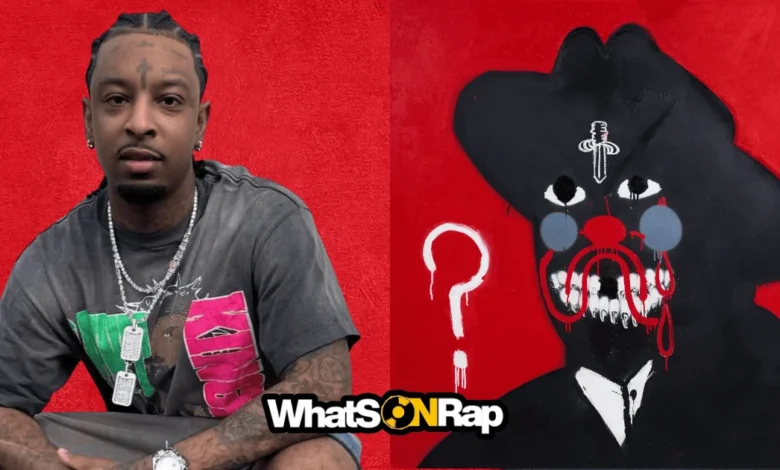
What Happened to the Streets? is finally here! 21 Savage, the Atlanta-based trap icon whose real name is Shéyaa Bin Abraham-Joseph, has cemented his place in hip-hop with a catalog that blends raw street narratives, deadpan delivery, and unflinching honesty.
Born in London and raised in Atlanta’s Zone 6, 21’s journey from underground mixtapes like The Slaughter Tape (2015) to Grammy-winning collaborations has been marked by resilience, especially after his 2019 ICE detention revealed his British roots. His previous album, American Dream (2024), was an introspective look at immigration, success, and fatherhood, peaking at No. 1 on the Billboard 200.
Now, on December 12, 2025, the album’s release date, 21 Savage drops What Happened to the Streets?, his fourth solo studio effort, executive produced by Metro Boomin and Southside. Spanning 14 tracks and clocking in at approximately 47 minutes, the project features heavy hitters like Drake, Lil Baby, Young Nudy, Latto, GloRilla, G Herbo, Metro Boomin, and Jawan Harris.
The title What Happened to the Streets? serves as both a lament and an interrogation of modern street culture’s decay. In an era dominated by social media beefs, snitching scandals, and diluted authenticity, think the fallout from high-profile cases like Young Thug’s RICO trial or the Drake-Kendrick Lamar feud, 21 Savage mourns the erosion of loyalty, codes of honor, and genuine grit.
Production-wise, the album leans into soulful trap with booming 808s, haunting piano loops, and cinematic samples, courtesy of producers like Metro Boomin, Southside, Zaytoven, Turbo, Coupe, 20 Rocket, Boi-1da, Macshooter, Oz, Wheezy, and Peter Lee Johnson. Critically, early reactions praise its authenticity but note some repetition in 21’s monotone flow.
The album’s themes revolve around betrayal, survivor’s guilt, materialism’s hollow promises, and the streets’ unrelenting violence, delivered with 21’s signature numbness that occasionally cracks to reveal vulnerability. What sets this project apart is its balance of menace and mourning.
Unlike the boastful Her Loss (2022) with Drake, this is reflective trap rap, questioning why the “G-code” has fractured. Disses are subtle and generalized, targeting systemic issues like snitching rather than individuals, while tributes provide the emotional core, honoring fallen peers and personal losses.
Table of Contents
Track-by-Track Breakdown of 21 Savage’s What Happened to the Streets?
- WHERE YOU FROM (Prod. Metro Boomin & Southside) – 3:39
In 21’s album What Happened to the Streets? The opener explodes with thunderous 808s and eerie synths, setting a confrontational tone. 21 interrogates authenticity: “Where you from? Not where you at / You claim the block, but you ain’t never trapped.” This track establishes the album’s central question, critiquing fake gangsters who exploit street narratives for clout.
Themes of territorial pride and survival dominate, with 21 recounting his rise from poverty: “Came from the mud, now I’m flooded in ice.” No explicit disses, but it subtly shades outsiders in rap, perhaps a nod to industry plants. The production’s cinematic build-up mirrors 21’s calculated menace, making it a strong intro that hooks listeners into the street code debate.
- HA (Prod. Zaytoven) – 2:53
Zaytoven’s signature piano keys drive this energetic cut, where 21’s “ha-ha-ha” ad-libs mock his enemies. It’s a flex-heavy anthem about overcoming adversity: “They laughin’ now, but I was cryin’ in the trenches / Turned my pain to millions, now they all pay attention.”
Themes touch on wealth, violence, and reflection on the streets’ lost edge. Lines like “These ni**as soft, they fold for a check” hint at general disloyalty, tying into the album’s motif. No tributes here, but the track reinforces eroded integrity, with 21’s deadpan flow contrasting the upbeat production for ironic effect.
- STEPBROTHERS (Feat. Young Nudy) (Prod. Coupe & 20 Rocket) – 4:09
A gritty family reunion with 21’s cousin Young Nudy, this track delves into brotherhood and betrayal over ominous traps. Nudy’s verse is vicious: “If you ain’t slid for your brother and he got killed, you a b*tch, ni**a / Man, these ni**as’ll do it, they don’t give a f*ck ’bout turnin’ they brother in.”
21 responds with ink and vengeance: “Lost a couple brothers, that’s the reason why I’m inked up / He was pillow-talkin’, that’s what got his a*s beamed up / Opps keep on dyin’, why the f*ck you think they teamed up? / We don’t spare nobody, we’ll hit your teams up.”
This is one of the album’s rawest, with disses aimed at traitors, no names, but the imagery of “pillow-talkin'” slams informants. Themes of familial bonds fracturing under pressure make it a standout, amplified by the duo’s chemistry.
- CUP FULL (Prod. Turbo) – 3:27
Slowing the pace, this mid-tempo banger explores indulgence and excess amid trauma. Over syrupy beats, 21 raps about leaning to numb pain: “Cup full of mud, tryna drown out the screams / Streets took my dawgs, now it’s just me and the team.”
Critics note its drag due to monotone delivery, but it introspectively questions materialism replacing codes: “Got the bag, but the soul feel empty.” Subtle nods to hollow victories, with no direct disses or tributes, but it builds the album’s narrative of personal growth clashing with chaos.
- POP IT (Feat. Latto) (Prod. Southside) – 3:17
A bouncy, high-energy collab with Latto, blending trap and pop. Latto’s fiery bars on confidence: “Big Latto, I pop it like pistols / These b*tches be hatin’, but I’m in my bag.” 21 trades verses on “popping off”: “Pop it on opps, watch ’em drop like confetti.”
It’s empowering and fun, with light shots at haters: “You talk tough online, but in person you petty.” No targeted disses, but it critiques fake toughness. One of the more accessible tracks, its vibe contrasts the album’s darker tones.
- MR. RECOUP (Feat. Drake) (Prod. Metro Boomin & Boi-1da) – 3:45
A smoother, more reflective cut with Drake where both address rebuilding after losses, financial, personal, and industry-related, without feeding into the drama surrounding them.
- J.O.W.Y.H (JUMP OUT) (Prod. Southside) – 3:12
Aggressive solo cut, short for “Jump Out With Your Heat.” 21 details ambushes: “Jump out the whip, let it rip like a chainsaw / Opps in the dirt, that’s the law of the streets.” General disses at opps and snitches: “You talk to the feds, now your whole team deceased.” It captures violence’s cycle, reminding of 21’s origins. Precise flow emphasizes readiness in treachery.
- DOG $HIT (Feat. GloRilla) (Prod. Macshooter) – 3:28
GloRilla’s loud, rugged delivery plays perfectly off 21’s deadpan tone. Together, they are the clowns who talk tough online but show nothing in real life.
- HALFTIME INTERLUDE (Spoken Word over Soul Sample) – 1:45
The album’s manifesto, critiquing snitching: “You get mad, you picture me hittin’ her from the back, huh? / Screamin’, ‘Free him,’ and you know your brother a rat, huh? / Y’all gon’ break and bend the G-code for them racks, huh? / These ni**as tellin’ when you get caught… / They put the pressure on the b*tch ni**a that’s around you and he tell / Then he a rat, he been that, bruh.” Generalized disses at informants and code-breakers, questioning ethics. Soulful delivery leads into introspection.
- BIG STEPPER (Prod. Metro Boomin) – 3:01
A victory lap with hard drums behind it. 21 raps about surviving long enough to become the one setting the pace, not following it.
- CODE OF HONOR (Feat. G Herbo) (Prod. Southside & Oz) – 3:36
Herbo’s intensity pairs well with 21’s calm menace. Both talk about the weight of surviving the streets while watching the rules, and the people change around them.
- GANG OVER EVERYTHING (Feat. Metro Boomin) (Prod. Metro Boomin) – 3:22
A dramatic, movie-like Metro production carrying a record about loyalty: who 21 stands with, who he stands for, and who he’ll never switch on.
- ATLANTA TEARS (Feat. Lil Baby) (Prod. Wheezy & Metro Boomin) – 3:40
A somber tribute to 21 and Lil Baby’s home city and the losses it has endured. They reflect on trust, tragedy, and the responsibility that comes with success.
- I WISH (Feat. Jawan Harris) (Prod. Metro Boomin & Peter Lee Johnson) – 4:05
The emotional peak of the album comes with “I WISH,” which gently interpolates R. Kelly’s classic while turning it into something far more personal. Over a mournful hook from Jawan Harris, 21 runs through a series of heartbreaking “what ifs,” imagining tiny changes that might have saved the people he’s lost.
He mourns Young Dolph with “I wish Dolph would’ve Uber Eats them cookies instead,” and pictures Nipsey staying in bed with Lauren London rather than heading to the store that day. He remembers Takeoff with intimate detail, “Real drinker, you ain’t even like no ice with your Fanta,” and salutes Lil Keed, Trouble, and XXXTentacion with painful hypotheticals, wishing they’d stayed home, taken a different route, or simply avoided the wrong place at the wrong time.
21 keeps going, honoring Pop Smoke, PnB Rock, Rich Homie Quan, Juice WRLD, King Von, Young Scooter, and others, each line hitting like a personal flashback. It’s not just name-dropping; it’s grief in real time, the kind that forces you to replay moments and wonder how fate could’ve shifted by inches.
The song becomes even more intimate when 21 turns inward, reflecting on the deaths of Johnny, CJ, Tayman, a younger brother, and his grandmother. “I wish me and Johnny said, ‘F*ck it,’ turned back ’round,” is one of the album’s rawest confessions, regret wrapped in hindsight.
Jawan Harris ties the entire tribute together with a soul-stirring refrain: “Oh, I wish / I wish that I could see my friend / Just so I could smile again.”
It’s a quiet, devastating ending, grief, guilt, and memory woven into one of 21’s most vulnerable moments to date.
Subtle disses on 21 Savage’s What Happened to the Streets?
21 Savage doesn’t go for cheap name-drops; his disses are strategic, psychological, and street-wise, hitting systemic issues, fake toughness, and betrayal. His anger is precise, controlled, and rooted in street ethics, targeting those who compromise the “code” or exploit the streets for clout.
- “WHERE YOU FROM”
The album opens with a blistering attack on internet critics and content creators who talk about street life without living it: “All you internet n*as, I see you / All you content creators / Catch you down bad and break your MacBook / Break your iPhone, b*tch-a*s n**a—f*ck you.”
These lines mark bloggers, YouTubers, podcasters, and TikTok analysts as public enemies, asserting that real street experience outweighs online commentary.
- “HALFTIME INTERLUDE”
21 focuses on rats, snitches, and code-breakers, delivering some of the coldest lines on the album: “Screamin’, ‘Free him,’ and you know your brother a rat / Y’all gon’ break and bend the G-code for them racks / These ni**as tellin’ when you get caught… / They put the pressure on the b*tch ni**a that’s around you and he tell / Then he a rat, he been that, bruh.”
Here, betrayal is punished with verbal precision, casting judgment on anyone who puts profit over loyalty. This is a cultural indictment of those who betray the streets’ code.
- “STEPBROTHERS” (Feat. Young Nudy)
Young Nudy exposes traitors in the inner circle: “If you ain’t slid for your brother and he got killed, you a b*tch, ni**a / Man, these ni**as’ll do it, they don’t give a f*ck ’bout turnin’ they brother in.”
21 fires back: “Lost a couple brothers, that’s the reason why I’m inked up / He was pillow-talkin’, that’s what got his a*s beamed up.” The “pillow-talkin’” reference reinforces his zero tolerance for snitches, showing betrayal comes with consequences.
- Apparent Diss to 6ix9ine
21 subtly calls out the notorious snitch: “Like the rat boy who be wearing lace fronts and sht… the n** who told in New York man… the Mexican – the internet took his sht down.” An apparent direct critique of 6ix9ine’s infamous snitching reputation, framed in 21’s icy, street-level tone.
- “J.O.W.Y.H”
An unapologetic street threat, reminding enemies that the streets have rules: “Jump out the whip, let it rip like a chainsaw / Opps in the dirt, that’s the law of the streets.” No names, just raw warning.
- “DOG $HIT” (Feat. GloRilla)
21 and GloRilla mock fake toughness in rap: “You bark but no bite, that’s that fake shit.” Playful but cutting, targeting those who talk more than they act, including “keyboard warriors” and internet clout-chasers.
21 Savage’s disses are calculated, icy, and morally rooted. He targets snitches, traitors, fake gangsters, and online posers, while also taking subtle shots at 6ix9ine, NBA YoungBoy, and Lil Durk’s camp. Across the album, the message is clear: loyalty matters, and crossing the streets’ code won’t be ignored.
Tributes on 21 Savage’s What Happened to the Streets?
The tributes form the emotional core of What Happened to the Streets?, grounding 21 Savage in a rare level of vulnerability. “I WISH” serves as the project’s centerpiece, a quiet, aching requiem where he imagines alternate endings for more than a dozen fallen peers: Young Dolph, Nipsey Hussle, Takeoff, Lil Keed, Trouble, XXXTentacion, Pop Smoke, PnB Rock, Rich Homie Quan, Juice WRLD, King Von, Young Scooter, and Lil Durk.
The losses hit even harder when 21 turns inward. He honors Johnny (the inspiration behind his own name), CJ, Tayman, his younger brother, and his grandmother in What Happened to the Streets? confessing, “Every time I see they mamas, I wanna drop to the floor.” These personal reflections deepen the album’s emotional weight.
That grief echoes throughout the project. On “CODE OF HONOR,” he laments loved ones who became “statistics,” and on “ATLANTA TEARS,” he revisits the pain of watching his city lose so many young lives. These moments amplify a sense of survivor’s guilt that runs beneath the entire album.
In the end, 21’s message in his album What Happened to the Streets? is simple and devastating: “Wish my niggas were still here.” It’s the most honest he’s ever sounded, a plea for reunion with people time can’t return.
21 Savage’s latest interview reveals more about What Happened to the Streets?
21 Savage’s most recent interview, released on December 11, 2025 (just hours before the album dropped at midnight on December 12), was with Big Bank (also known as Perspectives with Bank).
This sit-down promo chat served as a preview of his mindset behind the project, touching on street culture, industry drama, and the album’s themes. It’s his latest public discussion tied directly to the release, and he focuses on the album’s raw (What Happened to the Streets?), reflective core rather than just track-by-track details. He keeps it real and street-level, emphasizing authenticity over hype.
Overall Theme and Title Breakdown: What Happened to the Streets? is a nod to how street rap and real hustler energy got “diluted” in 2025 amid beefs, legal issues, and the genre’s shift toward more commercial or gimmicky vibes.
He calls it a “wake-up call” for hip-hop, blending gritty trap storytelling with moments of growth and luxury. It’s not nihilistic like his early work but more calculated, exploring “hustling, g*nplay, revenge, and giving back to the hood” while questioning why the “pure violence and code” of the streets feels lost. He ties this to his own come-up in Atlanta, saying the title asks, “Where’d that raw energy go? We gotta reclaim it without the distractions.”
Production and Sound: In What Happened to the Streets? He shouts out producers like Metro Boomin (featured on “GANG OVER EVERYTHING”) for the “cinematic, soulful trap” vibe, layered beats with tense builds, interludes, and New York-style drums over Atlanta flows. 21 notes it’s polished but “unbothered,” matching his numb delivery.
No full tracklist breakdown, but he teases collabs like Drake on “MR RECOUP” and Lil Baby on “ATLANTA TEARS.” Features like Young Nudy, Latto, GloRilla, G Herbo are “family extensions” that amp up street code without forcing it.
Personal Mindset and Why Now: After a quiet 2025 focused on features, 21 says the album What Happened to the Streets? is him “reclaiming the throne” post-American Dream (2024). It’s 14 tracks of “violence with purpose,”ruthless bars on robbing, fallen homies, and hustle, but with maturity.
He wants peace in rap but stresses real consequences: “If you say wild shit in a song, I’ma handle it outside the booth.” He addresses 2025’s “bad year for street rap,” blaming distractions like endless beefs for killing the genre’s edge.
Broader Context (Beefs and Industry): While not a deep album dive, he touches on how external drama influenced it, like weighing in on NBA YoungBoy vs. Lil Durk (calling it “pointless distractions that weaken the code”) and optimism for Drake-Metro Boomin collabs (“They family; it’ll happen soon”). He pushes for unity: “Streets ain’t about beef; it’s survival and loyalty.”
Overall themes, impact, and legacy
In the end, What Happened to the Streets? isn’t just another 21 Savage album, it’s a reflection on how much the world around him has changed, and how much he’s lost along the way. Through gritty storytelling, sharp observations, and some of his most personal confessions to date, 21 delivers a project that feels both heavy and honest.
The album What Happened to the Streets? doesn’t try to reinvent the genre; instead, it holds up a mirror to the culture, questioning loyalty, violence, and the fading codes that once shaped street life. Its emotional center, especially the tributes and moments of survivor’s guilt, shows a version of 21 that’s older, more aware, and unafraid to sit with the pain that built him.
Ultimately, What Happened to the Streets? leaves listeners with more than a title, it leaves a challenge, asking us to reconsider where the streets were, where they are now, and what they’ve become. It’s a raw snapshot of hip-hop’s present and a reminder of the cost behind the stories artists carry.