Rappers apologizing to Kendrick Lamar and the surprising stories behind their regrets
The real stories behind rappers apologizing to Kendrick Lamar and why they said sorry.

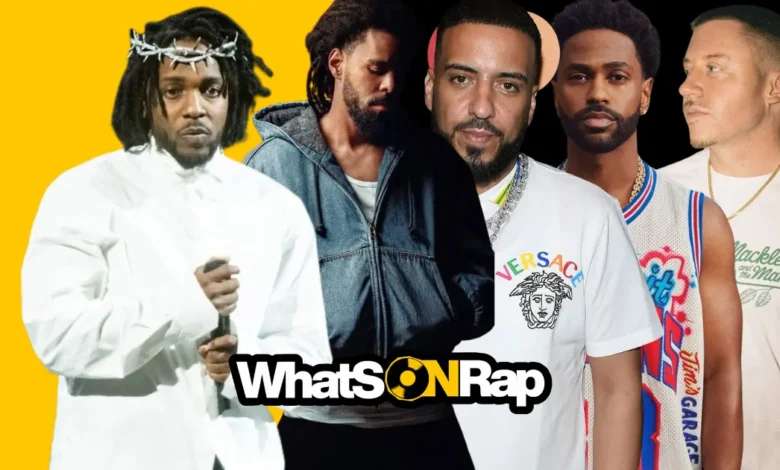
Rappers apologizing to Kendrick Lamar is more than a headline; it’s a window into the heart of hip-hop culture. Over the years, Kendrick Lamar has become a central figure in rap, admired not just for his lyricism but for the respect he commands from peers. This influence has led several rappers to publicly or privately apologize for past remarks, verses, or competitive tensions, showing the human side of an industry often associated with rivalry.
The stories behind these apologies highlight the nuances of hip-hop. They’re not just about ego or pride; they’re about recognizing talent, acknowledging mistakes, and restoring relationships. When rappers apologize to Kendrick Lamar, it reflects a deeper understanding of community, humility, and the power of words in shaping reputations.
These apologies range from festival stages to private messages and Instagram posts. Some arose from Grammy controversies, others from competitive disses in tracks, and a few from personal struggles and misunderstandings. Collectively, they illustrate how rappers apologizing to Kendrick Lamar can transform tension into respect, demonstrating the growth and human side of rap culture.
Table of Contents
Rappers apologizing to Kendrick Lamar: full stories behind the regrets
Okay, so here’s the deal,rappers apologizing to Kendrick Lamar isn’t just a list of “oops, my bad” moments. Some of these apologies are messy, some are heartfelt, and a few are downright funny if you follow the drama.
We’re going to break down why each rapper decided to hit pause on the beef, how they delivered their apologies, and what happened after. Think of it like getting the backstage gossip of hip-hop, but with real lessons about respect and growth.
J. Cole
Background and what happened:
J. Cole’s apology is among the most high-profile examples in recent hip-hop. In March 2024, Kendrick appeared on Future and Metro Boomin’s “Like That,” rejecting the notion of a “Big Three” in rap with the line, “Motherf**k the big three, n*ga, it’s just big me!” This was widely seen as a direct shot at Cole and Drake. In response, Cole released 7 Minute Drill on his mixtape Might Delete Later (April 5, 2024), criticizing Kendrick’s discography with lines like:
“Your first st was classic, your last st was tragic / Your second st put ngas to sleep, but they gassed it.”
Reason for the apology:
Cole later described the diss as misaligned with his values, calling it “the lamest, goofiest s**t.” He emphasized the importance of inner peace over escalating feuds and reflected on how the track made him feel like he was moving incorrectly, reminiscent of his mindset from 10 years prior.
Details of the apology:
On April 8, 2024, at the Dreamville Festival in North Carolina, Cole publicly addressed the situation: “Y’all love Kendrick Lamar, correct? As do I. So I just wanna come up here and publicly be like, ‘Bruh, that was the lamest goofiest shit,’ and I say all that to say it made me feel like 10 years ago when I was moving incorrectly, and I pray that God will line me back up on my purpose and on my path. I pray that my nga really didn’t feel no way and if he did, my nga, I got my chin out. Take your best shot.”
Outcomes and additional context:
The apology generated memes and debates among fans, some labeling it “LAAAMME.” Cole later addressed the backlash in a freestyle on I Hate the Summer (November 2024), stating: “I used to be top, see, the apology dropped me way out of the top 3, no problem.” Despite the controversy, the relationship between Cole and Kendrick remained stable, highlighting the prioritization of mental health over rap battles.
Macklemore
Background and what happened:
Macklemore’s apology stems from the 2014 Grammy Awards, where he and Ryan Lewis won Best Rap Album for The Heist, beating Kendrick’s good kid, m.A.A.d city along with albums from Kanye West, Drake, and Jay-Z. This sparked backlash from fans and the hip-hop community, questioning the Grammys’ choices.
Reason for the apology:
Macklemore later admitted he felt “white guilt” and believed Kendrick was “robbed” of the recognition he deserved for the cultural significance of his album.
Details of the apology:
He privately texted Kendrick: “You got robbed. I wanted you to win. You should have. It’s weird and sucks that I robbed you.”
He even shared the text screenshot publicly on Instagram, explaining he froze during his acceptance speech and intended to acknowledge Kendrick.
Outcomes and additional context:
Kendrick responded graciously in a 2015 Complex interview: “He probably didn’t need to Instagram the text. But what’s done is done.” Both rappers have maintained mutual respect since, demonstrating how rappers apologizing to Kendrick Lamar can help heal professional misunderstandings.
Lupe Fiasco
Background and what happened:
In January 2018, Lupe Fiasco tweeted criticisms of Kendrick, questioning his status as a “top-tier lyricist” and labeling the Control verse as “wack and super overhyped.” He also claimed that Kendrick and SZA’s “All the Stars” artwork copied his DROGAS WAVE album cover.
Reason for the apology:
Lupe later reflected that publicly critiquing fellow artists’ careers was a “waste of time and energy.”
Details of the apology:
In an April 2018 Instagram livestream, he said: “Maybe I should have just left it alone. Even though my impetus was the ‘Control’ verse. I mean, you put yourself out there like that, so you opened yourself up to critique. I apologize for even engaging and talking about ngas’ careers. I’ll never do that st again.”
Outcomes and additional context:
In 2020 and again in 2024, Lupe clarified his apology was for the overall drama rather than specifically for Kendrick, tweeting: “I wasn’t apologizing to him lol…I was sorry about the entire shindig because it was such a waste of time…I fear no rapper of any kind.” This highlights how rappers apologizing to Kendrick Lamar can sometimes reflect broader lessons about humility and competitive respect.
Jay Electronica
Background and hat happened:
Jay Electronica briefly dissed Kendrick in February 2016 during a livestream, referencing past collaborations and mocking his Grammy nominations: “He’s got eleven Grammy nominations, y’all not equal / Maaaan fck these white people.”
Reason for the Apology:
He later sought unity over division, influenced by advice from Minister Louis Farrakhan and recognizing they were “brothers fighting the same enemy.”
Details of the apology:
In April 2016, he tweeted: “Peace to K dot and TDE because regardless to whom or what we are brothers fighting the same enemy. Forgive my past transgressions.” The apology calmed tensions, and Jay Electronica has continued to praise Kendrick indirectly, showing how rappers apologizing to Kendrick Lamar can be about maintaining bonds in the hip-hop community.
French Montana
Background and what happened:
In 2020, French Montana sparked debates by claiming he could go “neck to neck” with Kendrick in terms of anthems. He tweeted: “If we just talking about anthems, me vs Kendrick hit for hit! I believe I can go neck to neck!!”
Reason for the apology:
To avoid conflict and promote positivity among peers.
Details of the Apology:
On Instagram Live with Fat Joe, he clarified: “I want to do the positive thing here and stay out the way of trouble ‘cause at the end of the day, me, Thug and Kendrick [are] three different artists… We all know [Kendrick’s] a GOAT. We all know he’s at the top of the food chain.” The incident faded, reinforcing the message that even playful rivalry can lead to genuine humility, a moment of rappers apologizing to Kendrick Lamar.
Big Sean
Background and what happened:
Following Kendrick’s Control verse on Big Sean’s track, Sean responded with subtle disses on Me, Myself, and I (Freestyle) and No More Interviews. Kendrick replied on The Heart Part 4 and tracks like HUMBLE and ELEMENT.
Reason for the apology:
After Nipsey Hussle’s death in 2019, Sean sought to clarify miscommunications and ego-driven rumors.
Details of the apology:
In 2020 on Deep Reverence, Sean rapped: “After what happened to Nipsey I reached out to Kendrick / It wasn’t even no real issues there to begin with / Lack of communication and wrong information from people fueled by their ego.” The two reconciled privately and continue to maintain mutual respect, showing how rappers apologizing to Kendrick Lamar can mend old misunderstandings.
Meek Mill
Background and what happened:
Kendrick’s 2013 Control verse targeted East Coast rappers, prompting Meek to respond on Ooh Kill Em: “Man, you claiming you the king of New York, what the fk wrong with you, nga? Step back.”
Reason for the apology:
To downplay the feud and demonstrate respect for Kendrick.
Details of the apology:
At Power 99’s Powerhouse concert in Philadelphia (October 2013), Meek publicly acknowledged Kendrick while minimizing tension. Kendrick later accepted via Twitter. The feud ended amicably, illustrating yet another case of rappers apologizing to Kendrick Lamar where respect outweighed rivalry.
Dody6
Background and what happened:
Dody6 dissed Kendrick in 2025 amid personal struggles including homelessness, claiming the collaboration didn’t help his situation.
Reason for the apology:
He recognized Kendrick had positively influenced his life, possibly guided by advice from associates.
Details of the apology:
On April 25, 2025, he wrote on Instagram Stories: “He blessed me and my life.” Fans speculated “the homies got on his ass,” leading to the apology. This moment underscores that rappers apologizing to Kendrick Lamar can be deeply personal, reflecting growth beyond music alone.
Lessons learned from rappers apologizing to Kendrick Lamar
When you look at all these moments together, there’s a clear pattern: even in a game as competitive as hip-hop, saying “I was wrong” can be a power move. From J. Cole reflecting on his mixtape to Macklemore sending a private text, these stories show that respect, humility, and sometimes a little bit of humor go a long way.
It’s proof that rappers apologizing to Kendrick Lamar isn’t about weakness; it’s about being human, keeping relationships, and growing not just as artists but as people. And honestly, it makes the hip-hop world feel a little warmer and a lot more real.
The stories of rappers apologizing to Kendrick Lamar demonstrate the human side of hip-hop. From J. Cole to Dody6, these apologies reveal humility, respect, and recognition of influence. Kendrick’s career shows that respect in rap isn’t only earned through lyrical skill, it’s also about inspiring peers to reflect, grow, and sometimes admit mistakes.
Hip-hop thrives on competition, but these moments remind us that reconciliation, accountability, and respect remain at its core. Apologies in the rap world are not weakness; they’re powerful affirmations of character and culture.