Keefe D 40 years to life sentence officially handed down in Tupac Shakur case
Justice arrives 30 years later for the only man charged

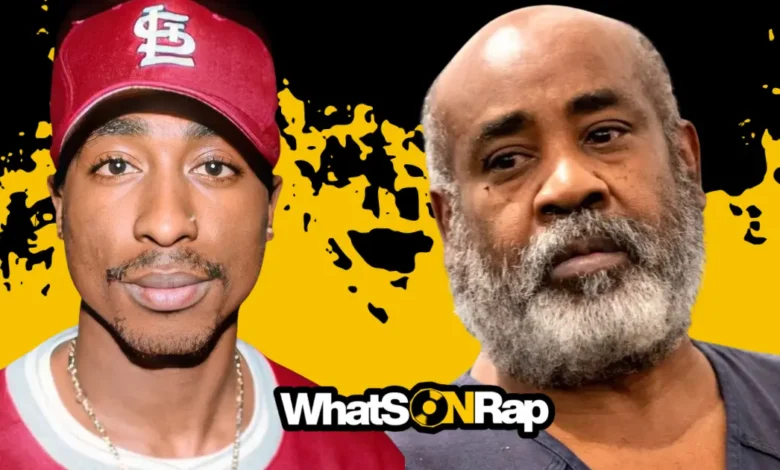
Keefe D 40 years to life is now the official sentence for Duane “Keffe D” Davis after a Las Vegas judge delivered the ruling on October 13, 2026. The 63-year-old former South Side Compton Crips figure became the only person ever charged in connection with the 1996 sh**ting death of Tupac Shakur. A jury had found him guilty in late August of first-degree charges with use of a deadly weapon, and today’s decision marks the end of a three-decade wait for legal accountability.
Prosecutors argued that Davis organized the drive-by attack near the Las Vegas Strip on September 7, 1996, provided the weapon, and directed the group even though he did not fire the shots himself. The case rested heavily on Davis’s own past statements in interviews and his 2019 memoir. Judge Carli Kierny handed down the term while addressing the lasting impact on Tupac’s family and the culture at large. Davis has already stated he will appeal.
This ruling closes one of the most closely followed cold cases in hip-hop history. Below is the complete breakdown of the sentencing, the evidence that led to the conviction, the background of the night in question, and what comes next.
Table of Contents
Keefe D 40 years to life sentence details from the courtroom
On Tuesday afternoon in Clark County District Court, Judge Carli Kierny formally sentenced Duane Keith Davis to 40 years to life. She also noted a mandatory enhancement tied to the use of a deadly weapon. Davis received credit for 731 days already served.
Before the sentence was announced, family members of Tupac Shakur spoke in court and asked for the longest possible term. Prosecutor Marc DiGiacomo told the judge that Davis had spent years publicly discussing his role and, in the state’s view, attempted to profit from the events. When asked if he wished to speak, Davis simply replied that he was “good” and would appeal the case.
The judge’s final remarks were direct. She told Davis he did not get to take a man from his family and walk away, especially when that man was Tupac Shakur. The world never forgot, she said, and neither did Las Vegas.
How the conviction came together
Davis was arrested in September 2023 after years of public statements. In his memoir Compton Street Legend and earlier interviews, including a 2008 proffer session with investigators, he described being in the white Cadillac that pulled alongside the vehicle carrying Tupac and Suge Knight. Prosecutors said he obtained the g*n and passed it to the back seat.
The jury deliberated for less than three hours in August 2026 before returning a guilty verdict on the first-degree charge with a deadly-weapon enhancement. Davis maintained his innocence throughout the trial and did not take the stand. His defense argued that investigators never solidly placed him at the scene and that his earlier comments were unreliable.
He remains the sole individual ever charged in the case. Other people named in various accounts over the years, including his nephew Orlando “Baby Lane” Anderson, are deceased.
The night of September 7, 1996
Earlier that evening, a fight broke out in the lobby of the MGM Grand after a Mike Tyson boxing match. Tupac and members of his entourage confronted Orlando Anderson. Hours later, while Tupac rode in the passenger seat of a black BMW driven by Suge Knight, a white Cadillac pulled up at a traffic light on the Las Vegas Strip. Shots were fired. Tupac was hit multiple times and died six days later in the hospital at age 25. Knight was injured but survived.
Prosecutors presented the sh**ting as direct retaliation for the earlier casino altercation. The case stayed cold for nearly three decades until Davis’s own words brought renewed attention and eventually formal charges.
What the sentence means going forward
At 63 years old, a 40-years-to-life term effectively means Davis is expected to spend the rest of his life in prison. He has already indicated he will file an appeal, which could take years to resolve. Legal observers note that appeals in high-profile cases of this nature often focus on the reliability of prior statements and the long gap between the events and the charges.
For Tupac’s family and many in the hip-hop community, the ruling represents a long-delayed form of closure. For others, questions remain about the full sequence of events that night and whether every detail will ever be fully known.
The larger cultural weight of the case
The 1996 sh**ting has remained one of the most discussed events in music history. Books, documentaries, podcasts, and countless online theories kept the story alive while the official investigation stayed quiet. Davis’s decision to speak publicly in later years changed the trajectory. His words became the foundation of the prosecution’s case and ultimately led to the only criminal conviction tied to the incident.
Today’s Keefe D 40 years to life decision does not rewrite the cultural impact of Tupac’s work or the unanswered questions that still surround other aspects of that era. It does, however, place a formal legal period at the end of one of the longest-running chapters in hip-hop’s history.
Davis left the courtroom the same way he entered the case, defiant and promising further legal action. The sentence stands for now, and the appeal process will determine whether it remains the final word.