J. Cole reveals Early Rejection: 50 Cent Refused to Sign Him Over His “Tight Jeans” Before Fame
From Rejection to Rap Greatness: How a Surprising 50 Cent Decision Shaped J. Cole’s Hip Hop Journey.

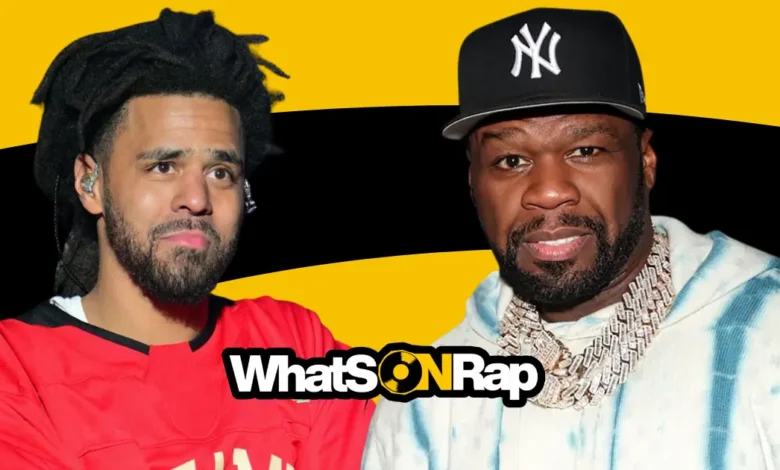
J. Cole reveals a surprising and almost unbelievable story from his early days in rap, one that shows just how unpredictable the hip hop industry can be. Before the fame, the sold-out tours, and the respect he now commands, there were moments of doubt and rejection. And one of those moments involved none other than 50 Cent.
J. Cole reveals that even with talent being recognized by people around him, getting a deal wasn’t guaranteed. The journey to becoming one of the most respected names in rap and hip hop wasn’t smooth, and sometimes the reasons behind missed opportunities were far from serious. That reality hits differently when you realize how close he came to signing with G-Unit.
J. Cole reveals these personal experiences during a recent conversation with Cam’ron, giving fans a rare look into the mindset and challenges he faced long before becoming a global hip hop icon. It’s a reminder that even legends had moments where things didn’t go their way, and sometimes for unexpected reasons.
Table of Contents
J. Cole Reveals Why 50 Cent Passed on Him Early in His Hip Hop Journey
J. Cole reveals that his rejection from 50 Cent wasn’t about his skills, his voice, or his vision; it came down to something much more superficial. During the interview, he explained that people within 50 Cent’s circle actually encouraged the G-Unit boss to pay attention to him. Still, things didn’t go forward.
According to Cole, the final decision came with a blunt and almost humorous explanation: “I can’t sign this n***a, his jeans too tight.”
J. Cole reveals this moment with a sense of reflection rather than bitterness. In many ways, it shows how subjective the rap and hip hop industry can be, especially in earlier eras when image played an even bigger role in how artists were perceived.
It also highlights how close he was to a completely different career path. Signing with G-Unit could have changed everything, from his sound to his identity as an artist.
J. Cole reveals how rejection shaped his path in rap and hip-hop
J. Cole reveals that moments like this didn’t stop him, they pushed him forward. Instead of getting stuck on what didn’t happen, he focused on building his own lane. That decision ended up defining his career.
In the world of rap and hip hop, authenticity often separates those who last from those who fade away. J. Cole reveals through his journey that staying true to himself mattered more than fitting into someone else’s expectations.
That independence later became a core part of his brand. Fans connected with his storytelling, his honesty, and his refusal to chase trends. Looking back now, that rejection almost feels like a hidden blessing.
J. Cole reveals a mindset that many aspiring artists can learn from: sometimes the doors that don’t open are guiding you toward something better.
J. Cole shares his thoughts on The Fall-Off and possible retirement
J. Cole reveals that his latest project, The Fall-Off, carries a deeper meaning than just another album release. It represents a moment of reflection and possibly closure.
When asked about retirement, he didn’t dodge the question. Instead, he gave a very honest answer about where he stands:
“I made this album so that if it was my last, I’m cool,” he explained. “And I am. If that’s my last album, I’m cool. If I get inspired in a year, two years, five years, ten years to do another album, I’m not gonna fight the feeling.”
J. Cole reveals that he approached the album with a sense of finality, but not pressure. It wasn’t about proving anything; it was about completing something he had set out to do.
That kind of mindset is rare in rap and hip hop, where artists often feel the need to constantly stay active to remain relevant.
J. Cole’s renewed passion for hip-hop after stepping back
J. Cole reveals that stepping away for a while actually helped him reconnect with his love for music. Sometimes distance brings clarity, and for him, it reignited the passion that first drew him into hip hop.
He explained:
“But this album is what I intended it to be, which is like, ‘Yo, I did what I said,'” Cole continued. “It just so happens, because of what happened two years ago, I’m very inspired right now because I fell back in love with this sh*t.”
J. Cole reveals that inspiration doesn’t always follow a schedule. It comes and goes, and the key is being open to it when it returns. That honesty resonates deeply with fans who have followed his journey from the beginning. In a genre driven by constant output, his approach feels refreshing and real.
50 Cent Responds to J. Cole’s Claim and Confirms the G-Unit Decision
After J. Cole opened up about the unexpected reason he wasn’t signed, 50 Cent didn’t stay silent for long. Instead, he went straight to social media to address the story himself, and surprisingly, he confirmed it without hesitation.
Responding just a day after the interview started making waves online, 50 Cent shared his reaction on Thursday (March 26), making it clear that what J. Cole had heard over the years was actually true. His tone, however, wasn’t defensive or serious. Instead, it leaned into humor, reflecting both how much the industry has changed and how unpredictable decisions can be in rap and hip hop.
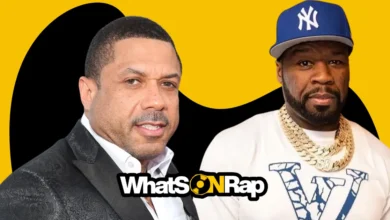
“I’m a J Cole fan man,” he wrote, posting a photo of himself alongside J. Cole. “The boy just had on denim spandex WTF how was I supposed to know that was gonna work. @phlivenyc.”
The comment quickly caught attention across the hip hop world, not just because it confirmed the story, but because it showed how something as simple as style and image could influence major label decisions at the time. Back then, G-Unit had a very specific look and energy, one that didn’t necessarily align with J. Cole’s more laid-back and introspective presence.
By calling himself a fan, 50 also made it clear there’s no bad blood. In fact, his response feels more like a reflection on how things played out rather than a regret or a criticism. It highlights how difficult it can be to predict success in the music industry, especially in rap, where trends, image, and audience expectations are always shifting.
Looking back now, the idea that something like “denim spandex” could factor into such a major career moment feels almost unreal. But it also shows just how different the landscape of hip hop was, and how artists like J. Cole ended up redefining it anyway.
Plans for a global tour following The Fall-Off
J. Cole reveals that he’s not slowing down just yet. Alongside the album, he’s preparing for a major world tour that will bring his music to fans across multiple continents.
The tour is set to begin in Charlotte this July, before moving through major cities like Miami, Atlanta, Philadelphia, Toronto, and Brooklyn. From there, he’ll take the show internationally, hitting cities like Berlin, Amsterdam, London, Paris, and Stockholm, before wrapping things up in South Africa in December.
J. Cole reveals through this tour that, retirement or not, he’s fully present in this moment. It’s a celebration of everything he’s built and possibly a farewell chapter, depending on where inspiration takes him next.
A lesson bigger than music
J. Cole reveals more than just a story about rejection; he shares a lesson about resilience, identity, and trusting your path. Being turned down by someone as influential as 50 Cent could have shaken his confidence. Instead, it became part of his story.
In rap and hip hop, where image, perception, and timing all play a role, his journey stands as proof that talent and persistence can outlast early setbacks.
J. Cole reveals that sometimes the reasons you don’t succeed right away aren’t even about your ability. And sometimes, those moments are exactly what shape you into who you’re meant to become.