Jay Z and Pusha T are named in the Epstein files as troubling details emerge
Jay-Z and Pusha T named in newly released Epstein files: high-profile figures in trouble.

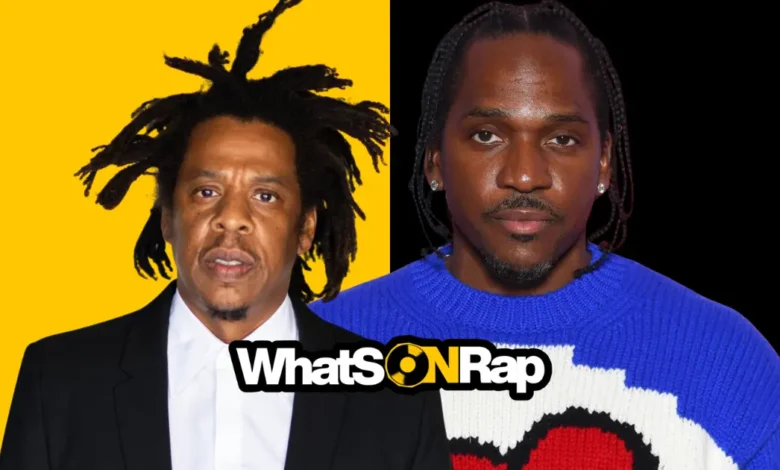
Jay Z and Pusha T became a major point of discussion after newly released documents connected to the Jeffrey Epstein investigation surfaced online. As millions of pages were made public, attention quickly turned to familiar names appearing inside the files, especially figures tied to rap and hip-hop culture.
For fans of rap culture, the mention of Jay Z and Pusha T raised immediate questions. Headlines spread fast, often without context, creating confusion about what the documents actually say and what they do not. That distinction matters, especially when reputations are involved.
Before speculation runs too far, it’s important to slow down and look closely at the nature of these records. The documents in question are not charges, findings, or confirmed evidence; they are part of a much larger archive that includes raw, unverified material.
Table of Contents
Jay Z and Pusha T appear in newly released Epstein files
The U.S. Department of Justice recently released millions of pages tied to the Epstein investigation under the Epstein Files Transparency Act. Among them were FBI “crisis intake” reports dating back to 2019. These reports are essentially hotline logs created when members of the public call the FBI to share information or allegations.
One anonymised intake report includes mentions of Jay Z and Pusha T, along with Harvey Weinstein. These names appear only within a caller’s account recorded by the FBI and not in Epstein’s personal logs, flight manifests, or confirmed investigative records.
Crucially, intake reports are not conclusions. They are raw submissions logged for documentation and possible follow-up. Many never lead to investigations, and many contain information that is never verified.
Understanding what FBI intake reports really mean
FBI intake reports exist to capture information exactly as it is reported by a caller. They are not sworn testimony, court findings, or evidence tested through investigation. Anyone can submit a tip, and the FBI records it without confirming accuracy at that stage.
In this case, the intake report describes allegations spanning several years. The caller claimed confusion around events and stated she believed she had been drugged. Within that narrative, references were made to Jay Z and Pusha T, but the documents do not show that law enforcement verified or pursued these claims.
Legal experts stress that appearing in an intake report does not imply guilt, wrongdoing, or even factual accuracy. Context is essential when reading these documents.
What the released documents actually say
The following excerpts come directly from the FBI intake reports included in the document release and are reproduced exactly as written:
“In approximately 1996, [redacted] resided with [redacted] in [redacted]. An unknown man abducted [redacted] from her home whence she later awoke in the presence of Harvey Weinstein and Shawn Carter (Jay-Z) while Weinstein had inserted his fingers into [redacted]. [Redacted] believes she was in Epstein’s mansion in Florida.”
“[Redacted] attributed the drugging as frequently performed by persons assigned as handlers … Among her handlers, [redacted] identified the artist Pusha T.”
These statements appear only within the context of a single hotline tip. The documents do not state that the claims were substantiated, investigated, or supported by independent evidence.
Social media reaction and the role of context
Once the documents became public, social media reactions followed quickly. Many posts referenced Jay Z and Pusha T without clarifying the nature of intake reports, leading to assumptions that went beyond the facts.
Some observers pointed to timelines, noting that Jay-Z was still an emerging artist in the mid-1990s, long before his rise as a global rap and business icon. Others emphasized how intake systems can collect rumors, fragmented memories, or unverified stories.
This reaction highlights how easily raw documents can be misunderstood when shared without explanation.
Why these mentions do not equal charges
At this stage, the references to Jay Z and Pusha T remain unverified claims recorded during a public hotline call. There are no charges, no announced investigations, and no findings tied to these mentions.
The Epstein document releases include many different materials, ranging from court records to internal notes. Intake reports sit at the lowest level of verification and are included for transparency, not confirmation.
Authorities and legal analysts consistently stress the same point: being named in a document is not evidence of wrongdoing. Careful reading matters, especially when discussing figures in rap, hip-hop, and popular culture.