J. Cole unveils the shocking story: Was “First Person Shooter” really a Drake & Kendrick Lamar collab?
Inside the untold story of ‘First Person Shooter’ and hip-hop’s biggest collaborations.

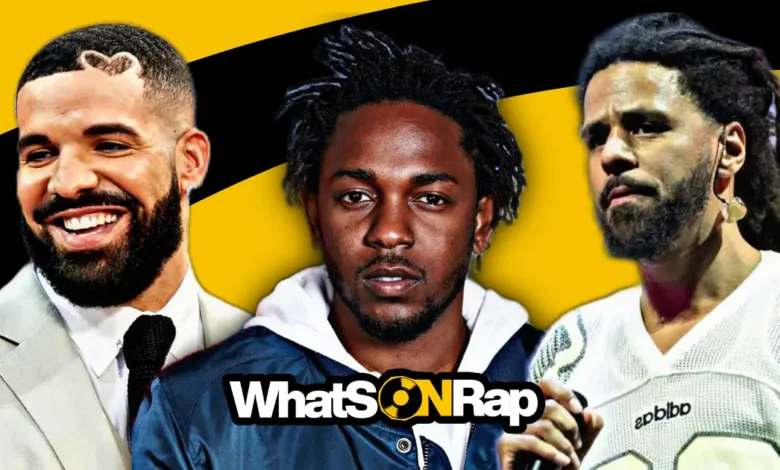
J. Cole unveils the truth about one of the most talked-about tracks in recent hip-hop history. During his recent appearance on the 7PM In Brooklyn podcast with Carmelo Anthony, the Dreamville rapper provided fans with fresh insight into the 2023 collaboration “First Person Shooter” and its unexpected connection to Drake and Kendrick Lamar.
For many hip-hop fans, the collaboration between J. Cole and Drake on For All The Dogs seemed straightforward at first. But J. Cole unveils details that suggest the track could have been very different. Initially, it was reportedly intended to be a collaboration between Drake and Kendrick Lamar, adding another layer to the “Big Three” discourse in rap circles.
J. Cole unveils how this revelation helps explain Kendrick Lamar’s subsequent disses on “Like That,” which featured Future and Metro Boomin. The track’s lyrics, proclaiming “it’s just big me,” directly addressed the perceived trio of top-tier MCs, leaving fans to speculate on the dynamics behind the scenes.
Table of Contents
J. Cole unveils the backstory:
How Drake, Kendrick Lamar, and “First Person Shooter” connect
J. Cole unveils the creative process and pressure behind contributing to the Drake track. He shared, “I’m not gon’ say we were all supposed to be [on it]. How it came to me was, before that beat ever made it to me, I think Drake wanted that to be a him and Dot song. I think that’s what it was. My interpretation is like, maybe when it wasn’t moving fast enough or he wasn’t getting the response he wanted, maybe he was like, ‘Let me hit Cole.’ ‘Cause I think Boi-1da was pushing, like, ‘Bro, you need to hit Cole.’”
J. Cole unveils how he approached the track with a sense of responsibility and respect. “I never looked at that song like it was going to be all of us. I thought it was me and Drake. And I just had the beat. It was nothing on it. And I felt mad pressure. ‘Cause I wanted to come through for him.
“He showed up at Dreamville Fest the year before that. I wanted to come through for him. I had to write that verse several times. So that’s a half-truth, kind of. But there’s no part of us making that song where it’s like, ‘Yo, Kendrick was supposed to be on here.’ Nah. I just got a beat for Drake, I wanted to come through for him on his album. The clock was running, and winding down, boom. And I came through.”
By sharing this, J. Cole unveils the behind-the-scenes reality of collaboration in hip-hop. Fans often see the final product without knowing the creative negotiations and timing pressures that influence the tracks they love.
J. Cole unveils how his collaboration history shapes hip-hop dynamics
J. Cole unveils his extensive collaborative history with both Drake and Kendrick Lamar, contextualizing his remarks. With Drake, he has worked on tracks like “Evil Ways,” “In The Morning,” and “Jodeci Freestyle.” Meanwhile, his work with Kendrick Lamar includes “Black Friday” remixes and “Forbidden Fruit.”
J. Cole unveils how these past collaborations influence fan perception of his relationships with both artists. Despite long-standing histories with each other, there has not been a direct continuation of the trio’s dynamic since “Fkin’ Problems” with A$AP Rocky and 2 Chainz in 2013. This gap makes the revelation about “First Person Shooter” particularly noteworthy in the hip-hop community.
J. Cole gives insights on fan speculation and industry pressure
J. Cole unveils the pressures that come with being asked to step into high-profile collaborations. He described the responsibility he felt toward Drake and the album’s timeline, emphasizing the creative urgency: “I had to write that verse several times… The clock was running, and winding down, boom. And I came through.”
Fans analyzing every lyric now have added context, thanks to J. Cole unveiling the half-truth of the track’s origin. The clarity sheds light on how some perceived “beef” moments, like Kendrick’s later disses, may have been more about timing and industry strategy than personal rivalry.
J. Cole on cultural impact of “First Person Shooter”
J. Cole unveils the broader significance of the track in shaping hip-hop discourse. By revealing that the song was originally meant for Drake and Kendrick, he not only offers insight into creative decisions but also highlights the influence of major collaborations on fan perception and rap narratives.
The track serves as a case study in modern hip-hop: the interplay of star power, timing, and collaboration choices. J. Cole unveils the subtle ways artists navigate these pressures, showing how a single beat or verse can spark speculation, rivalries, and cultural conversations.
The future of hip-hop collaborations
Looking ahead, J. Cole unveils the potential for more complex and high-profile collaborations. His reflections on “First Person Shooter” remind fans and industry insiders alike that the creative process often involves missed opportunities, last-minute adjustments, and strategic decisions that affect the music we hear.
J. Cole unveils how understanding these behind-the-scenes dynamics enriches appreciation for hip-hop as both a craft and a culture. The story of “First Person Shooter” illustrates that even in top-tier collaborations, timing, interpretation, and personal choices define the legacy of the music.