Rick Ross trolls The Game after “Set In Stone” triumphantly outsold “The Documentary 3”
When First-Week Numbers Turn Into Hip-Hop Banter

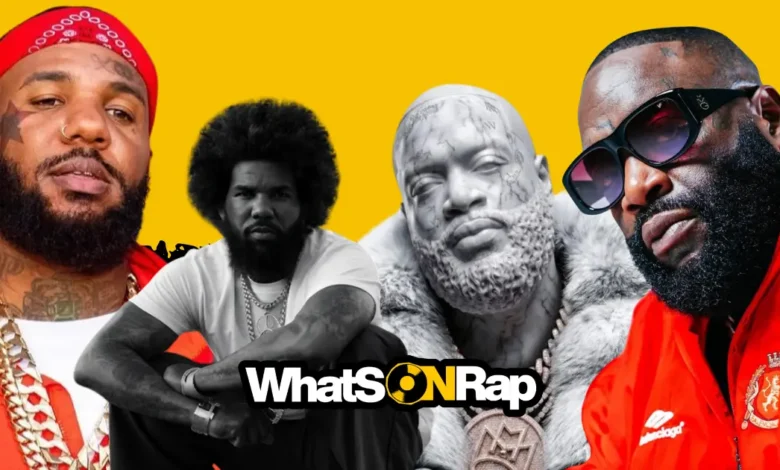
Rick Ross trolls The Game in one of the more straightforward sales-based jabs hip-hop has seen this year, turning first-week numbers into public commentary that quickly spread across social media. The Miami rapper pointed out that his album Set In Stone moved more units than The Game’s long-awaited The Documentary 3, even though the Compton artist stacked the project with major guest appearances.
This moment captures the ongoing reality of the music industry where streaming, pure sales, and feature power still get measured against each other in real time. Fans immediately picked up on the exchange because both artists are veterans with decades of catalog strength and previous chart history.
The core of the story centers on Rick Ross highlighting the roughly 19,000 album-equivalent units for Set In Stone versus around 15,000 for The Documentary 3. He framed the difference by calling The Game’s high-profile collaborations a “stimulus package” that still came up short. Both projects arrived in 2026 under very different rollouts, one tied to a major anniversary celebration and the other continuing a classic series, yet the numbers became the talking point. The comments also included a note of encouragement about the West Coast needing continued music from The Game.
This full breakdown covers every available detail on the trolling, the exact sales figures, the albums themselves, the feature lists, earlier related drama including 50 Cent’s shots at Ross, past interactions between the two rappers, and the broader context of how first-week performance still drives conversation. The rest of the piece expands on each of those elements with quotes, background, and the surrounding industry picture so readers get the complete picture beyond the initial social media clips.
Table of Contents
Rick Ross trolls The Game Over the Sales Numbers Showdown
The latest chapter began when Rick Ross addressed the first-week performance of both projects in a video that circulated rapidly on September 2, 2026. He laid out the figures clearly: Set In Stone, released earlier in the summer, moved about 19,000 units in its opening week. The Documentary 3, which dropped in late August, came in lower at approximately 15,000 units or under 16,000 according to the numbers he referenced.
Ross specifically called attention to the guest list on The Game’s album, naming heavyweights such as Drake, Kanye West, Snoop Dogg, Lil Wayne, E-40, Drakeo the Ruler, and Marsha Ambrosius among others. He described that stacked lineup as the “stimulus package” and noted that even with those names the project still finished behind his own release.
The delivery mixed competitive energy with a lighter close. After making the sales point, Ross told The Game to keep creating, stating that the West Coast needs him. The full quote that spread widely captured both sides of the moment:
“The point I want you to know is, ‘Set In Stone,’ which is out right now, did more numbers than ‘Documentary III’ with what they call a stimulus package. The Game, as an artist, continue to make music, my n*a. The West Coast needs you.” Another circulating version put the numbers more directly: “Set In Stone… did more numbers (19K) than Documentary 3 (15K), what they call the stimulus package.”
These remarks landed at a time when both albums were still fresh in the conversation and when hip-hop fans remain highly attuned to opening-week data.
The timing added extra weight. Set In Stone had already faced its own round of public scrutiny weeks earlier, so Ross using stronger relative numbers against another veteran created an immediate contrast that social media amplified. Clips of the comments racked up views quickly, with users sharing screenshots of the unit counts and debating whether feature power still guarantees commercial results the way it once did.
Breaking Down the Albums and Their First-Week Performance
Set In Stone arrived on July 17, 2026, as Rick Ross’s twelfth studio album and his first solo project in five years. Released through Maybach Music Group and Gamma, the record marked the 20th anniversary period of his classic debut Port of Miami. Tracking data showed it earned roughly 17,000 to 19,000 album-equivalent units in the first week, with the majority coming from streaming.
Pure album sales sat closer to 2,000 copies in early reports. The project debuted at No. 39 on the Billboard 200 and reached No. 12 on the Top R&B/Hip-Hop Albums chart. Guest appearances included Don Toliver, French Montana, Gucci Mane, Jeezy, T.I., Leon Thomas, BigXthaPlug, Rich the Kid, and Yung Miami among others. The album’s rollout included promotional singles and connected to Ross’s anniversary touring activity.
The Documentary 3 (also referred to as The Documentary III) followed on August 21, 2026. It serves as the third main installment in The Game’s signature series that began with the massive 2005 debut The Documentary, which sold over 586,000 copies in its first week and went multi-platinum. The 2015 sequels The Documentary 2 and 2.5 also posted solid numbers for their era. The new project runs 24 tracks and carries an independent release through Numinati and FTS Global Management.
Opening-day Spotify streams reached about 1.61 million, with the Drake collaboration “No Brakes” leading the way at over 200,000 plays. First-week album-equivalent units settled in the 15,000 range. Features span Drake, Kanye West, Lil Wayne, Snoop Dogg, PARTYNEXTDOOR, Leon Thomas, YG, Black Thought, Larry June, Drakeo the Ruler, Tyga, and additional West Coast voices. The album continues The Game’s long-running focus on storytelling and regional identity more than two decades into his career.
These contrasting rollouts, one supported by anniversary momentum and the other by a loaded feature list, set up the exact comparison Rick Ross used. In today’s market both totals reflect the challenges many established artists face when pure physical and download sales have largely given way to streaming equivalents.
The Feature Strategy and What “Stimulus Package” Really Means
Ross’s choice of the phrase “stimulus package” landed because it captured a common industry observation. High-profile guests are often expected to lift streams and visibility, especially on the first day and throughout the opening week. The Game’s list brought together multiple generations and regions: Drake and Kanye West for current mainstream reach, Snoop Dogg and E-40 for West Coast legacy, Lil Wayne for cross-regional appeal, and newer or regional names to keep the project grounded. Despite that assembly, the first-week total still trailed Set In Stone.
Ross’s own album carried a solid but less flashy guest roster focused more on consistent collaborators and newer voices within his orbit. The comparison therefore highlighted that name recognition alone does not automatically translate into higher equivalent units when the broader catalog, marketing timing, and fan engagement patterns differ. Many listeners noted the irony that Ross himself had been on the receiving end of sales-related jokes only weeks earlier, making his decision to highlight relative strength against The Game feel like a full-circle moment.
Looking Back at Previous Interactions and Parallel Drama
Rick Ross and The Game have crossed paths before in lighter and sharper ways over the years. In 2024 The Game released a track that took aim at Ross, and the two exchanged social media messages around other personal and professional topics. Those earlier moments never escalated into a sustained public feud the way some other hip-hop rivalries have, but they established a baseline of occasional tension that made the 2026 sales comments feel familiar rather than completely out of nowhere.
The more immediate parallel sits with 50 Cent’s extended trolling of Rick Ross over Set In Stone. Shortly after the July release, 50 Cent posted multiple times mocking the projected and final numbers, at one point claiming extremely low pure sales figures and telling Ross to “pack it up.” He repeatedly referenced the number of features on the album and declared the commercial moment over.
Ross responded by calling the focus on numbers “propaganda” and “fake bot numbers,” urging fans to judge the music itself and emphasizing long-term streaming over opening-week hype. He also fired back with comments about 50 Cent’s business activities in Shreveport. That earlier exchange put Ross in a defensive position, so using stronger relative numbers against The Game weeks later read to many as a form of reclaiming narrative control.
Additional context includes The Game’s consistent output across the Documentary series and his independent approach on the latest installment, alongside Ross’s continued activity through Maybach Music Group and anniversary events. Both artists maintain active careers that extend well beyond any single first-week total.
How Fans and the Industry Reacted to the Exchange
The video clips and quoted remarks spread quickly across X and other platforms. Some users treated the moment as classic veteran banter and appreciated that Ross closed with encouragement rather than pure dismissal.
Others pointed out the modest size of both totals in the current market and used the exchange to discuss larger trends in streaming, catalog strength, and the reduced impact of features compared with earlier eras. A portion of the conversation circled back to the earlier 50 Cent comments, noting that Ross had shifted from defending his own numbers to highlighting them against another peer.
No major public response from The Game dominated the initial wave of coverage, leaving the conversation centered on Ross’s statements and the data itself. Industry observers continued to track ongoing streams for both projects, recognizing that first-week figures form only one part of an album’s long-term performance. The Documentary series still carries significant cultural weight for many listeners, while Set In Stone adds another chapter to Ross’s extensive discography.
Why These Moments Keep Happening in Hip-Hop
First-week sales and unit counts remain a persistent measuring stick even as the industry has evolved. Artists, labels, and fans continue to watch the numbers closely because they provide an immediate, public benchmark. When two veterans release projects within weeks of each other, the comparison becomes almost inevitable. Rick Ross choosing to address the gap directly, name the features, and still offer a supportive note created a layered moment that felt true to the culture’s competitive yet often interconnected nature.
Both albums remain available on major platforms, and their streams continue to accumulate beyond the opening week. The exchange itself has already become part of the 2026 hip-hop timeline, joining other sales-related discussions that surface whenever new projects from established names arrive. For listeners following the full arc, the story includes the July release of Set In Stone, the August arrival of The Documentary 3, the earlier trolling Ross received, the history between the two artists, and the latest public comments that brought the numbers into open conversation once again.
In the end the moment underscores how commercial data, feature strategy, regional pride, and personal history still intersect when veteran rappers share the same cultural space. Rick Ross trolls The Game by placing the unit counts side by side, and the resulting discussion reveals as much about the current state of the industry as it does about the two artists involved.