Kid Rock Biography: Detroit Roots, Rock Stardom, and the Explosive Road to Halfway 2 Jesus
The wild, unapologetic ride of a genre-blending American original

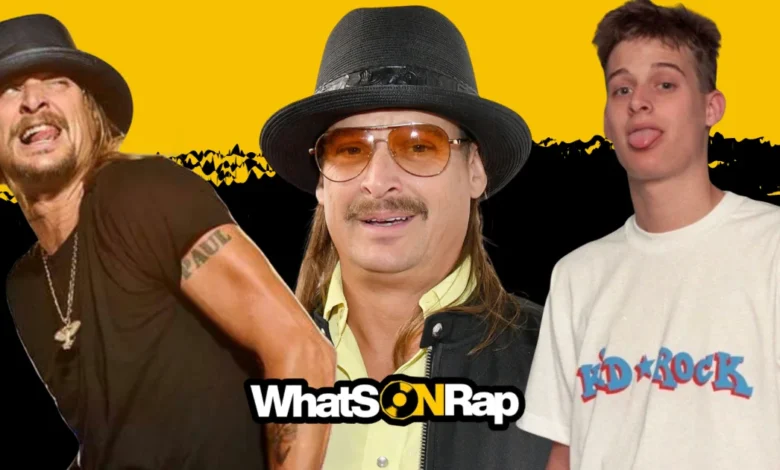
Kid Rock Biography opens a window into one of the most unpredictable careers in modern American music. From a privileged Michigan upbringing to the gritty Detroit hip-hop underground, through multi-platinum rap-rock dominance and later country-rock reinvention, Robert James Ritchie has refused to stay in any single lane.
This complete Kid Rock Biography covers every major chapter: the early struggles, the massive breakthrough, the personal turbulence, the political flashpoints, and the surprising 2026 faith-centered album Halfway 2 Jesus that reunited him with longtime friends Eminem and Lil Wayne.
Kid Rock’s story begins far from the spotlight, in Michigan, where a young artist started blending rap, rock, and country into a sound that refused to fit neatly into one category. From his early struggles to the massive success of Devil Without a Cause, his career has been shaped by bold musical choices, personal turning points, and a public image that has sparked plenty of conversation. This biography takes a closer look at the experiences, relationships, and creative shifts that shaped his path, and how he built a career on doing things his own way.
What makes this Kid Rock Biography different is its focus on continuity rather than isolated moments. The same restless energy that drove a teenage white kid into East Detroit parties still powers the man now releasing a 17-track project about grace, second chances, and refusing to let politics erase decades-old friendships. Ready to go deep? Let’s start at the beginning.
Table of Contents
Kid Rock Biography: Early Life and Detroit Beginnings
Robert James Ritchie entered the world on January 17, 1971, in Romeo, Michigan, the son of successful car dealer William “Bill” Ritchie and Susan Ritchie. The family lived on a sprawling multi-acre property complete with an apple orchard and horses, hardly the trailer-park mythology later associated with his public image.
Young Bobby found small-town life boring. In the mid-1980s he dove headfirst into hip-hop culture, teaching himself to breakdance, DJ, and rap. He joined local crews, including the Beast Crew, and began performing at parties and talent shows around Detroit.
By his mid-teens he was making regular trips into the city, soaking up the energy of the Detroit hip hop scene. A pivotal connection came through D-Nice of Boogie Down Productions, who helped the ambitious teenager land an opening slot and, eventually, a deal with Jive Records at age 17. The stage name Kid Rock stuck after club-goers kept referring to “that white kid who rocks.” Those early experiences in the Detroit hip hop scene shaped both his hustle and his refusal to apologize for crossing cultural lines.
Breaking Into the Industry and Early Albums
In 1990 Jive released Grits Sandwiches for Breakfast, a Beastie Boys-influenced debut produced with help from Too $hort and D-Nice. The album generated brief controversy when a college radio station played the explicit track “Yodelin’ in the Valley,” but commercially it sank. Jive dropped him. Undeterred, Ritchie kept grinding.
He released The Polyfuze Method in 1993 on Continuum and Early Mornin’ Stoned Pimp in 1996 on his own Top Dog label. These records showed a growing blend of rap, rock, and Southern influences. Around the same period he formed the live band Twisted Brown Trucker, a unit that would become essential to his explosive stage shows.
The independent years taught him self-reliance. He sold records out of his basement, toured relentlessly, and refined a sound that no major label seemed ready for, until Atlantic finally took the chance.
The Breakthrough with Devil Without a Cause
Everything changed in 1998. Devil Without a Cause arrived like a freight train. Combining aggressive raps, heavy guitar riffs, and anthemic choruses, the album produced era-defining singles “Bawitdaba,” “Cowboy,” and the more reflective “Only God Knows Why.” It eventually sold more than 14 million copies worldwide and earned diamond certification in the United States.
Suddenly the kid from Romeo was headlining festivals, appearing at Woodstock ’99, and becoming one of the biggest names in music. Twisted Brown Trucker proved itself a formidable live force, and Kid Rock’s reputation as a high-energy performer was sealed.
The success of Devil Without a Cause gave him leverage. He reclaimed rights to earlier material and released the compilation The History of Rock in 2000, further cementing his catalog.
Evolution Through the 2000s and Genre Blending
Rather than repeat the formula, Kid Rock kept evolving. Cocky (2001) delivered the massive Sheryl Crow duet “Picture.” The self-titled 2003 album continued the shift toward rock and country textures. Rock n Roll Jesus (2007) topped the Billboard 200 and spawned the worldwide hit “All Summer Long,” a mash-up that sampled both Warren Zevon and Lynyrd Skynyrd. Later records Born Free, Rebel Soul, First Kiss, Sweet Southern Sugar, and 2022’s Bad Reputation leaned further into country-rock and Southern rock while still carrying traces of his hip-hop origins.
Throughout these years he remained a multi-instrumentalist who produced most of his own work and refused to be boxed into any single genre. That restlessness is a defining thread in any serious Kid Rock Biography.
Personal Life, Controversies, and Public Image
Kid Rock became a father in 1993 when his son, Robert James Ritchie Jr. (Bobby Jr.), was born. He gained full custody early on and has spoken openly about the challenges and rewards of raising his son while building a career. A brief, high-profile marriage to Pamela Anderson in 2006 lasted only a few months. A long engagement to Audrey Berry ended around 2024–2025. He is currently unmarried.
Controversies have followed him for decades: flag-related incidents, onstage remarks, political endorsements, and sharp public statements. He has never pretended to be a polished celebrity. Supporters see authenticity; critics see recklessness. Either way, the persona has remained consistent, loud, patriotic, and unwilling to soften his edges for approval.
The Faith Chapter: Halfway 2 Jesus and Recent Collaborations
In October 2026 Kid Rock released Halfway 2 Jesus, his thirteenth studio album and a clear pivot toward faith-based themes. The 17-track project mixes rock, country, and hip-hop while exploring grace, redemption, and second chances. Lead single “James 1:17 (Jesus Is King)” set the tone. The album features Gary LeVox and Jimmie Allen on the title track, Lil Wayne on “7 Sins,” and Eminem on “Heal My Faith” after a last-minute track swap that generated significant media attention.
The Eminem collaboration carried special weight. The two Detroit artists have known each other for decades; Eminem previously appeared on “F*** Off” from Devil Without a Cause. Despite very different political outlooks, both men have emphasized that friendship can survive disagreement. Kid Rock has described the project as an attempt to model that possibility. Halfway 2 Jesus arrived at a moment when many longtime fans were curious whether the rocker still had new creative ground to cover. Early reaction suggests the answer is yes.
Legacy and the Road Ahead
More than three decades after his first recordings, Kid Rock remains a commercial force through touring, merchandise, and catalog streams. Estimates of his net worth hover in the $150–175 million range, built on album sales (over 25 million in the U.S. alone), relentless live shows, and business ventures including his Nashville honky-tonk. He has received multiple Grammy nominations and left a permanent mark on the sound of late-90s and early-2000s rock radio.
A full Kid Rock Biography is ultimately a story about refusal, refusal to stay in one genre, one political lane, or one version of himself. From the Detroit hip hop scene to the top of the charts and now into a more reflective chapter with Halfway 2 Jesus, Robert Ritchie has written his own rules. Whether listeners love him, hate him, or simply cannot look away, the career continues to unfold on his terms.