Tupac Coolio Collaboration Erased: The Wild $500 Studio Story Fans Never Heard
When $500 Killed a Legendary Rap Collab Forever

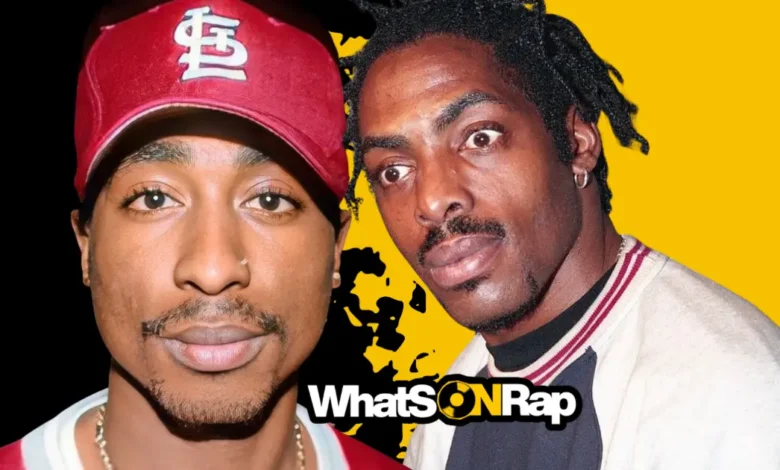
Tupac Coolio collaboration erased remains one of the most shocking lost moments in 1990s hip-hop. In a single studio session after Tupac’s release from prison, two of the biggest West Coast stars of the era recorded a full track together only for it to vanish forever over a few hundred dollars.
The story, first told by Coolio himself in 2018, involves his longtime producer DJ Wino, a heated money negotiation, and Tupac’s decision to wipe the entire recording on the spot. This article breaks down every detail of that session, the exact quotes from Coolio, the background of their relationship, earlier planned collaborations, and the wider context of how their friendship shifted during the Death Row years.
What started as a promising studio day turned into a permanent blank tape. Coolio later explained that the beat was created live, verses were laid down, and the song was complete before the payment argument erupted. The track was never leaked, never bootlegged, and never resurfaced. Fans have only Coolio’s firsthand account of what happened that day and why the engineer pressed erase. Beyond the $500 figure, the story also shines light on studio culture in the mid-90s, producer fees, and the changing personality Coolio said he noticed in Tupac after prison and the move to Death Row.
This piece gathers every available detail from Coolio’s original interview, puts the quotes in full context, explores the earlier “Til I C L.A.” concept that never happened, and looks at the friendship-to-friction path between the two rappers. From the early days when Coolio offered career advice to the later distance that grew after 1995, the full picture shows why this particular Tupac Coolio collaboration erased moment still fascinates fans decades later.
Table of Contents
Tupac Coolio Collaboration Erased: How a $500 Argument Wiped a Finished Song
The only public account of the lost song comes from Coolio’s March 2018 interview with Poland’s Popkiller. In that conversation he described a session that took place after Tupac got out of prison. Coolio’s original DJ and producer, Bryan “The Wino” Dobbs (better known as DJ Wino), made a beat right there in the studio. Coolio took a verse, Tupac took a verse, and Coolio believed a third person, possibly Rappin’ 4-Tay, may have been on the track as well.
Once the song was finished, the mood changed. Coolio recalled the exact exchange: “So we finish the song, and [The Wino] asked [Tupac], ‘How much are you gonna pay me?’ And Pac didn’t want to pay him nothin’; he tried to give him like a couple hundred bucks. I was giving [The Wino] $3,000 a track, but that’s my boy. He asked Pac [negotiating] from $3,000 all the way down to $500, and Pac wouldn’t do it. He told the engineer to erase the track, and he erased it. And I’m sure [The Wino] regrets that now.”
Those words remain the definitive record. According to Coolio, Tupac offered only a couple hundred dollars at first. Wino started at the $3,000 rate Coolio normally paid him and kept dropping the number until he reached $500. Tupac still refused. At that point Tupac instructed the engineer to delete the entire recording. The engineer followed the order. No safety copy, no rough mix, no surviving reel has ever surfaced. The Tupac Coolio collaboration erased that day simply ceased to exist.
Coolio was clear that this was not the same as the earlier planned song titled “Til I C L.A.” That concept appeared on a handwritten tracklist for a project Tupac was calling Supreme Euthanasia around September 1995. The idea listed Ice Cube and Coolio as features with production by DJ Battlecat. That track was never recorded. The session Coolio described with DJ Wino was a separate, completed recording that met a sudden end over money.
Early Friendship and Studio Connections Between the Two Rappers
Before the money dispute, Coolio and Tupac shared a real connection. Coolio has said in multiple interviews that he gave the younger Tupac career advice early on. Their paths crossed in Los Angeles circles, and Coolio even appeared in the video for Tupac’s “Temptations,” playing a hotel bellboy. That cameo showed they were still on friendly enough terms for on-screen collaboration.
DJ Wino’s role is central. He helped create the funky, melodic sound that defined Coolio’s breakthrough records, including work around the It Takes a Thief era. Coolio trusted him enough to pay $3,000 per track, serious money for a producer fee at the time. When Wino made a beat for Tupac in the same room, the expectation was that the payment would match the work already done. The refusal to meet even the reduced $500 figure turned a finished song into silence.
Studio culture in the mid-1990s often mixed creative energy with cash-on-the-spot deals. Producers frequently negotiated fees after the beat was already locked and vocals were recorded. In this case the negotiation failed completely. Coolio’s account suggests Tupac preferred to erase the work rather than pay the lowered amount. That decision left no tape for future release, remix, or even private listening.
How Death Row and Prison Changed the Dynamic
Coolio has spoken openly about noticing a shift in Tupac after the prison stretch and the move to Death Row Records. In a separate interview he said, “When he got with Death Row, he wasn’t the same dude. He started smoking and drinking a lot. The shit that tripped me out is he started gangbanging. He started gangbanging in his mid-20s.” That observation sits in the background of the studio story. The session happened after Tupac’s release, during the period when Coolio felt the old easygoing connection had faded.
The wider climate of 1995–1996 West Coast hip-hop was intense. Death Row dominated headlines, East-West tensions were high, and many artists navigated shifting alliances. Coolio stayed on a more independent path with Tommy Boy while Tupac became the face of the Death Row sound. Their earlier friendship did not completely disappear, Coolio still showed up for the “Temptations” video, but the easy creative partnership that might have produced multiple songs never fully returned.
No other witnesses have publicly confirmed the exact details of the erased track. The engineer’s name has never been released, and DJ Wino has not given a widely circulated interview about the incident. Coolio’s 2018 recollection remains the single primary source. Popkiller published the interview, and English-language sites such as Ambrosia For Heads quickly translated and reported the quotes, bringing the story to a wider audience.
Why the Lost Track Still Matters to Fans
Unreleased Tupac material has always carried heavy weight. Every new discovery or rumor sparks debate. In this case the song was completed and then deliberately destroyed. That finality makes the Tupac Coolio collaboration erased story different from the usual vault tracks that surface years later. There is no rough mix circulating on file-sharing sites, no short snippet on an old DAT, and no producer later claiming to have kept a copy.
The $500 figure itself has become part of the legend. In today’s streaming economy the number feels almost trivial next to the potential value of a verified Tupac and Coolio verse together. In 1995–1996 dollars it was still a real sum for a single beat, yet far below what Coolio routinely paid his own producer. The gap between the offered couple hundred and the final $500 ask proved impossible to bridge.
Coolio’s tone in the Popkiller interview mixed frustration with a touch of regret on Wino’s behalf. He did not claim the song would have been a massive hit, but he clearly felt the erasure was unnecessary. The fact that he waited until 2018 to tell the story suggests it stayed with him for more than twenty years.
Broader Context of Mid-90s Collaboration Culture
Many planned collabs from that era never left the drawing board. Ice Cube and Tupac discussed working together multiple times. Snoop, Dr. Dre, and others moved in overlapping circles. Yet finished songs that were wiped on purpose remain rare. Most unreleased material survived because someone kept a safety copy or a cassette walk-out. In this instance, the instruction to erase was followed completely.
DJ Wino continued working with Coolio for years afterward. Their partnership helped shape records that sold millions. The single session with Tupac stands as an outlier, an almost-finished product that money disagreements were erased in real time. Coolio’s willingness to name the exact dollar amounts and quote the conversation gives the story unusual specificity.
Recent interest in the tale has grown again through social media shares and hip-hop history accounts. Each time the quotes recirculate, new listeners discover that a completed Tupac Coolio collaboration erased over a few hundred dollars once existed. The details have not changed since 2018. Coolio has not added further comments in later interviews, and no contradictory account has emerged.
The story ultimately captures a very human moment inside the mythic 1990s. Two major artists, a trusted producer, a finished song, and a payment gap that could not be closed. One command to the engineer, and the tape was blank. That is why the Tupac Coolio collaboration erased episode continues to surface whenever fans discuss lost classics and the real price of studio pride.