Boosie BadAzz Verzuz Lil Wayne Could Be Worth Watching After Bold Claim
Boosie Ain’t Backing Down From Anybody

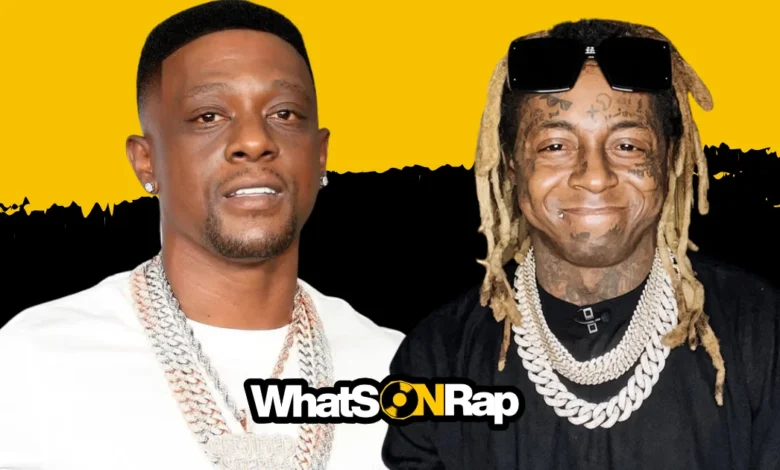
Boosie BadAzz Verzuz Lil Wayne is the conversation lighting up timelines after a raw, unfiltered video clip surfaced and refused to die. In a casual room setting that felt more like real talk than any polished interview, the Baton Rouge legend looked people dead in the eye and made it clear his catalog is built for war. He did not whisper it. He did not hedge. He planted his flag and dared the culture to test it.
The moment carried that classic Southern confidence, part street gospel, part championship mindset. Boosie framed his two distinct eras like Kobe’s dual numbers, reminded everyone how long he has been eating in this game, and when the ultimate name dropped, he answered without blinking. No press release. No staged confrontation. Just a man who believes the music still hits hard enough to stand in any arena.
What followed was the kind of online firestorm only hip-hop can produce. Fans started building set lists in the replies, old heads pulled up classic tracks, and the debate over depth versus energy turned personal. The clip did not just spark opinions. It forced people to revisit two deep Southern catalogs and ask whether pure confidence plus longevity can still shake the table in 2026.
Table of Contents
Boosie BadAzz Verzuz Lil Wayne: The Exact Words That Started Everything
The video that set everything off shows Boosie speaking to a small group of people around him. Someone asks how long he has been out. He answers with pure conviction: “How long have I been out? Man, I’m Him!” The conversation shifts to eras. Which version would he bring to a Verzuz, the early Lil Boosie heat or the later Boosie BadAzz chapter? He refuses to split himself.
“It don’t matter,” he says. “I got two Hall of Fames, real talk. Just like Kobe, I’m No. 8 and No. 24.” He keeps going: “I started in ’98, it’s ’26, man.” Then the room floats the name that carries the most weight. Lil Wayne. Boosie does not flinch. “Bring him on. You go get Wayne. I’m gon’ stand up like a muthaf**ka champ.”
Those lines traveled fast. The Kobe comparison landed especially hard because it treated both phases of his career as complete, Hall of Fame-level bodies of work. Early raw street records on one side. The more reflective, battle-tested music on the other. He claimed both. And when the biggest Louisiana name in the conversation came up, he invited the smoke with open arms. Multiple outlets confirmed there is no actual beef. This was pure belief in the music.
The timing added extra fuel. Only weeks earlier Boosie had traded shots with former Hot Boys member Turk over catalogs and style. That exchange already had people speaking the language of Verzuz. When Wayne’s name entered the chat, the culture was ready.
The Mindset Behind the Confidence
Boosie has never moved like an artist waiting for permission. From the Concentration Camp days and the Pimp C cosign through the classic Trill Entertainment run, he built a catalog that still moves Southern crowds the second the beat drops. “Wipe Me Down,” “Set It Off,” “Mind of a Maniac,” the Webbie collabs, the pain records that followed his legal battles, these are not just songs. They are regional anthems with long memories.
Calling both eras Hall of Fame-worthy was a sharp way of owning the full story. The younger Lil Boosie version was reckless, vivid, and locked into Baton Rouge reality. The later chapter brought different weight after prison, loss, and years of still delivering for the people who never left. By stacking them side by side like Kobe’s numbers, Boosie refused to let either half of his career be treated as lesser.
Wayne’s catalog sits in rare air. The Hot Boys foundation, the Dedication mixtape dominance, the Carter run, the features that turned every song into an event, few artists have flooded the culture at that level for so long. That depth is exactly why so many people raised eyebrows at the claim. Yet Boosie’s answer was never about disrespect. It was about standing on his own body of work without apology.
Catalog Against Catalog in a Verzuz Setting
A real Verzuz lives and dies by sequencing and crowd reaction more than pure critical ranking. Boosie would almost certainly open with the street records that turn venues into chaos the moment the first notes hit. The energy of those Southern anthems is hard to manufacture. They were built for the people who still play them at full volume years later.
Wayne’s side of the stage would pull from a bottomless well. Mixtape classics, radio records, experimental cuts, and songs that defined entire summers. The sheer volume of undeniable moments is the strongest argument against Boosie’s confidence. Still, the question is never only about who has more. It is about who can answer in the moment and keep the room locked in for twenty rounds.
Both men know how to command a stage. Both have given the culture more than enough music to fill multiple set lists. The gap in national scale is real. The gap in regional fire is also real. That tension is what makes the idea interesting.
How the Internet Responded
Reactions split along familiar lines. Some called the claim pure delusion and pointed straight at Wayne’s unmatched run. Others from the South pushed back just as hard, arguing that Boosie has twenty records ready that can still rock any building and that certain regions still feel his music in their chest. The “two Hall of Fames” line became instant meme material, with fans pairing Boosie album covers next to Kobe jersey photos.
Clips kept circulating with fresh captions every few hours. Dream set lists appeared in replies. Old tracks got new streams. Whether people agreed or laughed, the conversation stayed alive. In a timeline that usually moves on overnight, this one refused to fade quietly.
The Real Possibility of It Happening
Wayne has never shown strong interest in the Verzuz format. He has spoken before about why it does not appeal to him, and so far there has been no public reply to Boosie’s comments. The platform itself is quieter than it was during its peak years, though the right names can still create massive numbers.
Boosie has also been mixed on the idea in the past, once saying the format did not fully match the spirit of his music. His recent energy suggests the door is more open now, at least when the conversation involves artists he respects enough to measure himself against. The earlier Turk exchange already put Verzuz language back in the air. The Wayne comments felt like the natural next step in that same confidence.
For now it remains a powerful hypothetical. No dates. No negotiations. Just a clear statement and a culture that cannot stop arguing about it.
Why the Moment Still Carries Weight
Even if the battle never leaves the group chat, the clip captured something true about Boosie in 2026. He is still here, still releasing, and still willing to put his full catalog on the line against the highest names. Comparing his two eras to Kobe’s numbers and then inviting Wayne into the conversation is pure unfiltered energy. It forces people to pull up old playlists, argue about impact, and remember why certain voices never really leave the conversation.
Hip-hop has always run on these kinds of statements. They keep catalogs alive. They keep debates honest. Whether you think Boosie is reaching or simply standing ten toes down, the music is back in the spotlight because of it. The original video is still making rounds, and every new wave of shares brings another round of opinions. In a culture that rarely slows down, a moment of pure belief still cuts through.