Abdul El-Sayed Eminem Not Afraid Campaign Ad Marks a Massive Cultural Shift in Politics
When Hip-Hop Beats Hit the Ballot: How Slim Shady’s Anthem Shook Up Michigan’s Race!

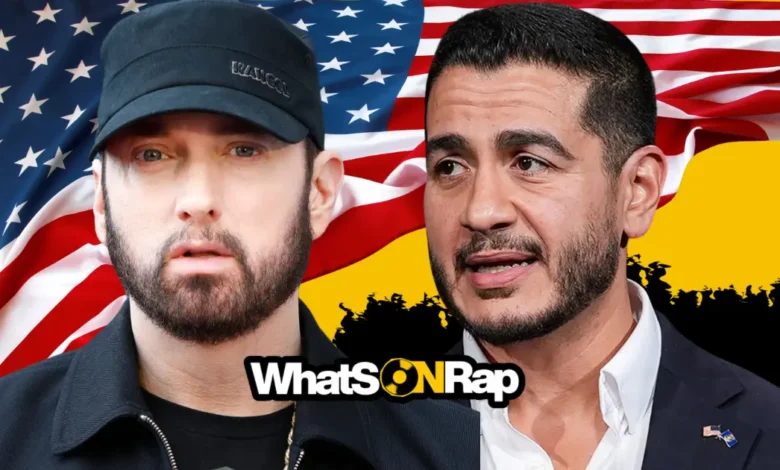
Abdul El-Sayed Eminem Not Afraid Campaign Ad created a massive wall of sound across Michigan on Election Day, transforming a standard voter drive into an explosive cultural moment. The collision of high-stakes electoral politics and iconic hip-hop beats brought an unmistakable wave of grit to the final stretch of the U.S. Senate race. When public health expert and Democratic candidate Dr. Abdul El-Sayed dropped his final digital blitz, voters were greeted not by standard political horn sections or subdued piano chords, but by the thundering bassline of Marshall Mathers’ 2010 diamond-certified hit.
The anthem set an energetic tempo for a campaign built on grassroots mobilization, progressive health advocacy, and unyielding urban resilience. By pairing high-intensity footage of town halls, rally speeches, and working-class supporters with Eminem’s defiant declaration to face down obstacles, the campaign captured the emotional spirit of Michigan’s electorate.
It signaled to voters across Detroit, Grand Rapids, and the Upper Peninsula that the candidate was ready to stand his ground against deep-pocketed opposition. Beyond the raw energy of the track, the ad sparked immediate debate over how modern political campaigns tap into local pop culture icons to drive record-breaking turnout at the polls.
This sudden fusion of political ambition and hip-hop history instantly dominated social media feeds, leaving political analysts and music industry observers dissecting every frame. The track choice carried deep symbolic weight throughout the Great Lakes State, given Eminem’s status as a local legend who embodies blue-collar defiance.
As election coverage shifted from policy debates to viral digital strategies, the video stood out as a masterclass in emotional resonance. It proved that in the digital age, a carefully chosen beat can bridge the gap between policy proposals and voters who feel disconnected from conventional political theater.
Table of Contents
Abdul El-Sayed Eminem Not Afraid Campaign Ad Unleashes Detroit Energy on Election Day
The Abdul El-Sayed Eminem Not Afraid Campaign Ad made its debut early on Tuesday morning as voting sites opened across Michigan. Dr. Abdul El-Sayed shared the high-octane video across his official social media platforms alongside a simple yet urgent message: “Michigan. It’s time. It’s up to us to show the country what’s possible. The world is watching.” The visual package interwove intimate clips of El-Sayed embracing voters on the trail, rallying labor union members, and delivering fiery speeches on healthcare reform, all synchronized precisely to the driving percussion and triumphant chorus of Eminem’s famous anthem.
The choice of “Not Afraid” was far from accidental. Released in 2010 on Eminem’s multi-platinum album Recovery, the song originally served as the rapper’s personal manifesto of overcoming personal addiction, breaking free from dark periods, and promising never to let down the people depending on him.
Transposed into the arena of U.S. Senate politics, those same lyrical themes of recovery, solidarity, and courage resonated deeply with voters navigating economic changes, healthcare crises, and political division. The ad leveraged the song’s universal call, “I’m not afraid to take a stand, everybody come take my hand” to present El-Sayed not just as a candidate, but as a movement leader uniting diverse communities under one roof.
Political campaigns in Michigan have long struggled to connect with younger voters and urban demographics through standard television commercials. By leaning heavily into digital video formats built around a legendary local track, El-Sayed’s media team broke through the noise of traditional political ads. The energetic tempo provided a stark visual contrast to standard attack ads saturating local airwaves, replacing negative political rhetoric with a message focused on community strength, collective action, and relentless perseverance.
The Legal and Cultural Rules of Political Music Licensing
Shortly after the ad spread across social platforms, curiosity mounted regarding how the campaign obtained the rights to run such a recognizable track. Initial online speculation suggested that Eminem had directly endorsed El-Sayed or formally gifted the rights to his music.
However, representatives for Marshall Mathers clarified that there had been no direct communication or personal sync authorization negotiated between the campaign and the rap icon. Instead, the campaign utilized built-in social media platform licenses, such as audio libraries available on Instagram and TikTok, which permit creators and public accounts to add commercial tracks to short-form video posts.
This distinction highlighted the modern boundary between formal political sync licenses for television and platform-native audio sharing for social clips. While national TV broadcasts require explicit permission from songwriters and record labels, social platforms often operate under broad master-use agreements that allow users to add trending songs to short videos.
The Abdul El-Sayed Eminem Not Afraid Campaign Ad showcased how modern political strategists creatively navigate these digital licensing frameworks to incorporate top-tier music without breaking copyright laws or requiring lengthy corporate negotiations.
Crucially, Eminem’s legal team issued no formal cease-and-desist demand or public rebuke against the campaign. This silence stood in contrast to past election cycles where music legends routinely clashed with politicians over unapproved song usage. When politicians use tracks without consent, artists frequently issue public reprimands or block the content. In this instance, the absence of pushback allowed the video to remain live throughout Election Day, continuing to rack up views and shares while keeping the campaign’s final message circulating among voters right up until polls closed at 8 PM.
Eminem’s Evolving Role in Michigan Politics and Public Endorsements
To understand why the Abdul El-Sayed Eminem Not Afraid Campaign Ad hit with such force, one must look at Eminem’s history of selective political involvement in his home state. Marshall Mathers has famously guarded his music, rarely allowing politicians to use his catalog for campaign purposes. For years, Slim Shady remained largely detached from party politics, preferring to voice his critiques of American society strictly through his studio albums and freestyle ciphers.
That dynamic shifted during the 2020 presidential race when Eminem officially licensed his Grammy-winning anthem “Lose Yourself” to the Joe Biden campaign. That 45-second black-and-white commercial, titled “One Chance,” marked the first time in history Eminem authorized one of his songs for a political campaign ad.
He continued his political involvement during the 2024 presidential race when Vice President Kamala Harris’s campaign featured “Till I Collapse” in campaign videos ahead of the election. Eminem even appeared alongside former President Barack Obama at a rally in Detroit, cementing his willingness to step onto the political stage when critical elections were on the line.
Eminem’s music carries a specific cultural weight in Michigan that money cannot buy. As a native son who rose from 8 Mile to global stardom, his songs represent working-class grit, perseverance, and local pride.
When the Abdul El-Sayed Eminem Not Afraid Campaign Ad echoed through mobile devices across Michigan, it tapped into that shared identity. It aligned El-Sayed’s progressive platform with a beloved cultural symbol of toughness and resolve, reassuring voters that he shared their roots and understood their struggles.
The High-Stakes Senate Battle in the Great Lakes State
The release of the Abdul El-Sayed Eminem Not Afraid Campaign Ad came at a critical moment in one of the nation’s most closely watched Senate contests. Running for the seat vacated by retiring Senator Gary Peters, El-Sayed faced off against Republican opponent Mike Rogers in a race marked by sharp policy contrasts and intense media scrutiny. With polls showing a tight contest down to the wire, both campaigns leaned heavily into last-minute voter turnout strategies.
El-Sayed’s campaign was built on a coalition of working-class families, young voters, progressive activists, and labor advocates. Throughout his run, he emphasized accessible healthcare, reproductive rights, environmental protection, and economic equality. However, mobilization remained the ultimate challenge. In competitive swing states like Michigan, winning an election often comes down to inspiring casual voters to actually show up at their polling places on Election Day.
The decision to drop the high-energy video right as polls opened provided a final jolt of adrenaline to El-Sayed’s ground game. Social media algorithms favored the video due to its audio track, pushing it to thousands of users across Detroit, Flint, Ann Arbor, and Lansing. The Abdul El-Sayed Eminem Not Afraid Campaign Ad served as a digital rally cry, reminding voters that every vote counted in deciding the future direction of the state and the nation.
Star-Studded Support and the Final Push to Victory
While the Abdul El-Sayed Eminem Not Afraid Campaign Ad dominated digital headlines, it was part of a larger push that featured endorsements from major cultural icons. Legendary musician Stevie Wonder appeared in campaign messaging urging citizens to support El-Sayed, saying, “There is so much on the line this election. We cannot be distracted… Go vote for Dr. Abdul El-Sayed for Senate.” Rock icon Bruce Springsteen also threw his weight behind El-Sayed, publicly backing the physician as a “fighter” dedicated to working families.
This coalition of cultural support helped propel El-Sayed through an intense election night. As votes were tallied across Michigan, the race proved to be as tight as pollsters had predicted. Ultimately, the high turnout in urban centers and university towns carried El-Sayed over the finish line, securing a historic victory over Mike Rogers and claiming the U.S. Senate seat for Democrats.
In the aftermath of the election, political commentators pointed to the campaign’s savvy digital media strategy as a key factor in its success. The Abdul El-Sayed Eminem Not Afraid Campaign Ad stood out as a prime example of how modern candidates can leverage pop culture, viral audio, and local pride to energize their base. By combining serious policy solutions with the rhythmic intensity of a Detroit rap legend, El-Sayed’s team proved that staying authentic to local culture can turn political momentum into tangible victory at the ballot box.
