Hip-Hop Big 3 of Every Era: Our Definitive Rankings (1980–2026)
Who Really Ruled Each Decade?

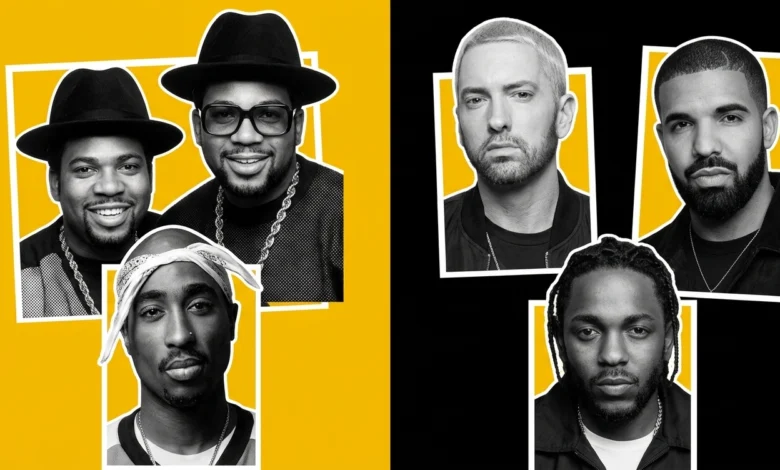
Hip-Hop Big 3 debates have always been one of the most intense conversations in the culture. At What’s On Rap, we decided to create our official ranking of the three most important artists in every major era from the 1980s all the way to 2026. This list is based on dominance during the specific period, cultural impact, influence on the generation, and commercial success measured by the standards of each era.
Music consumption changed dramatically over these decades. In the 1980s and 1990s, artists lived and died by vinyl, cassettes, and especially CD sales. The 2000s mixed strong physical sales with the rise of digital downloads. From the 2010s onward, pure streaming numbers became the main measurement of success. These differences make it unfair to judge a 1990s legend by 2020s streaming metrics, which is why we evaluated every era by its own rules.
In this article, the What’s On Rap team breaks down our Hip-Hop Big 3 for each period with detailed explanations. This is our definitive point of view.
Table of Contents
Hip-Hop Big 3 of the 1980s: The Foundation Era
The 1980s turned hip-hop from a local New York movement into a national and eventually global force. The artists who stood tallest during this decade had to break barriers that no longer exist today.
Run-DMC
Run-DMC were the true pioneers of mainstream success. They made hip-hop look and sound cool to the entire world. With their black fedoras, Adidas tracksuits, and hard-hitting production, they created a visual and sonic identity that kids everywhere copied. The crossover success of “Walk This Way” with Aerosmith was a historic moment that opened doors for every rapper who came after them. Their albums sold strongly in an era when rap albums rarely went platinum, and their influence on both music and fashion remains massive.
LL Cool J
LL Cool J was the first real solo superstar in hip-hop. While most successful acts were groups, LL carried entire albums by himself with charisma and confidence. He could make tough street records and soft radio hits without losing credibility. Songs like “I Need Love” showed that rappers could be vulnerable and still win, while tracks like “I’m Bad” kept his tough image intact. His longevity and star power made him one of the most important figures of the decade.
N.W.A
N.W.A brought a completely different energy from the West Coast. Their music was louder, angrier, and more confrontational than almost anything coming out of New York at the time. Straight Outta Compton forced America to look at life in Compton and South Central Los Angeles. Even though they faced heavy radio bans and media criticism, their cultural impact was undeniable. They created the blueprint for gangsta rap and opened the door for the entire West Coast explosion that followed.
The 1990s: The Golden Era Peak
Many fans still consider the 1990s the highest artistic point in hip-hop history. Competition was fierce, albums felt like events, and the culture was at its most passionate.
2Pac
2Pac was pure emotion and intensity. He could make a song for the club, the streets, or the struggle and make all of them feel real. His ability to connect with listeners on a personal level was unmatched. Even though his career was short, the volume of classic material he released in a few years is incredible. His influence went far beyond music into fashion, activism, and overall culture.
The Notorious B.I.G.
Biggie Smalls represented perfection in the art of rapping. His flow was smooth, his storytelling was vivid, and his voice was instantly recognizable. Albums like Ready to Die and Life After Death set a standard for lyricism and replay value that few have touched since. He made complex rhyme schemes sound easy and effortless, which is one of the hardest things to do in hip-hop.
Nas
Nas arrived in 1994 with Illmatic, an album that many still call the greatest debut of all time. His writing was poetic, detailed, and mature far beyond his years. While he never chased commercial trends as aggressively as some of his peers, his respect level within the culture has always been elite. Nas showed that pure lyricism could still stand at the top of the game.
The 2000s: Superstars and Commercial Power
The 2000s were bigger, louder, and more commercial than any previous era. Hip-hop became the dominant sound in global popular music.
Eminem
Eminem was a true global phenomenon. He brought technical rapping to the highest mainstream level while selling tens of millions of albums worldwide. In an era still driven by CD sales, his numbers were historic. Beyond the sales, his influence on an entire generation of writers and the way he forced conversations about race, fame, and mental health made him impossible to ignore.
Jay-Z
Jay-Z operated like a CEO who also happened to be one of the best rappers alive. He consistently released strong albums throughout the decade while building a business empire. His ability to stay relevant from the beginning of the 2000s all the way to the end showed incredible adaptability. He represented both lyrical respect and financial success at the highest level.
Lil Wayne
Lil Wayne had one of the most dominant individual runs in hip-hop history during the second half of the 2000s. His mixtape series changed the way artists built momentum, and Tha Carter III was a massive commercial peak. Wayne’s influence on melody, wordplay, and the overall sound of young rappers can still be heard clearly today.
The 2010s: The Streaming Takeover
The 2010s completely changed the rules. Streaming platforms became the main way people listened to music, and the artists who understood the new system rose to the top.
Drake
Drake mastered the streaming era better than anyone. He blended rapping and singing in a way that appealed to the widest possible audience and released music at a pace that kept him constantly present. His catalog performance and ability to dominate playlists made him the commercial face of the decade.
Kendrick Lamar
Kendrick became the artistic standard of the 2010s. Albums like good kid, m.A.A.d city and To Pimp a Butterfly received the kind of critical praise usually reserved for classic rock or jazz records. He proved that deeply personal and politically aware music could still achieve massive success.
J. Cole
J. Cole built his position through consistency and a strong connection with his core audience. He avoided most major trends and still managed to debut at number one multiple times. His focus on songwriting and message gave him a unique place next to Drake and Kendrick.
The 2020s (Until 2026): Fragmented Dominance
The current era is the hardest to judge because it is still unfolding, but clear patterns have emerged.
Kendrick Lamar
Kendrick has separated himself through major cultural moments and continued high-level artistry. His impact in this decade has gone beyond music into larger conversations about excellence and competition in hip-hop.
Drake
Drake remains the biggest streaming force in the game. Even as the culture sometimes debates his position, the numbers and consistent presence keep him firmly in the top tier.
Future
Future has been the most influential voice on the actual sound of street and trap music throughout the 2020s. His consistency and effect on the next generation of artists give him a strong claim to the third spot.
Final Thoughts
Looking across all these eras shows how much hip-hop has evolved. The 1980s were about survival and breakthrough. The 1990s were about artistic peaks. The 2000s turned rappers into global superstars. The 2010s rewarded streaming intelligence and catalog power. The 2020s demand both cultural impact and constant output in an oversaturated market.
The Hip-Hop Big 3 of each era earned their position by dominating the specific conditions of their time. These rankings reflect the official view of the What’s On Rap team after careful consideration of every factor that matters in this culture.