Kurupt credits Eminem for Quietly Funding Life-Saving Rehab After Near-Death Scare
A Quiet Act of Brotherhood That Changed Everything

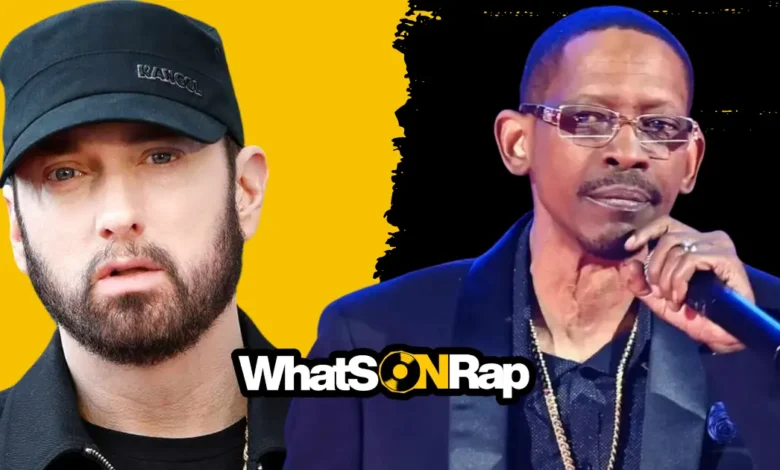
Kurupt credits Eminem for stepping up during one of the darkest chapters of his life, revealing how the Detroit legend quietly covered the full cost of private rehab after severe alcohol addiction nearly killed him. In a candid conversation on SiriusXM’s Sway in the Morning, the Tha Dogg Pound icon detailed the seizures, a nearly three-week medically induced coma, and the unexpected lifeline that arrived through Dr. Dre.
This story goes far beyond a simple favor, it highlights decades of mutual respect, the harsh realities of addiction in hip-hop, and a powerful reminder that real support often happens away from the cameras. From the historic “Till I Collapse” shout-out to Kurupt’s recent musical resurgence with Tales From the Hood, the full picture shows why this moment hits so deep and what it means for both artists today.
The revelation offers a rare look inside the private side of hip-hop brotherhood while also connecting to Kurupt’s long public struggle with alcohol and Eminem’s own well-documented path to sobriety. Readers will find the complete details of how the help was arranged, the exact words exchanged, the health crisis that forced the change, and the broader context of Kurupt’s career and recovery. Everything from past hospital visits to his brand-new album and ongoing creative partnerships is covered so the story feels complete rather than surface-level.
What follows breaks down the interview quotes, the timeline of events, the history between these two heavyweights, and why the gesture still resonates weeks after it first surfaced. The rest of the article expands on every angle with the full available context and related background that makes this moment larger than a single headline.
Table of Contents
Kurupt Credits Eminem For the Private Support That Arrived at the Perfect Time
During his appearance on Sway in the Morning alongside producer DJ Battlecat to discuss new music, Kurupt did not hold back. He described how his drinking had reached a life-threatening point, leading to multiple seizures and a medically induced coma that lasted almost three weeks. When he came out of that darkness, the first meaningful call came from Dr. Dre.
“It was Dr. Dre that called and was just giving his support and just let me know that, you know, we all go through these things,” Kurupt explained. “He was just giving me that game.”
Then came the part that still clearly moves him. Dre relayed a message from Eminem. The plan was already in motion: place Kurupt with trusted people, cover every expense, and keep the entire stay completely private so no one outside the circle would know where he was.
“I’m gonna put Kurupt with my folks and I’m going to put some money into getting him into like, a rehab situation to where he can sit down and enjoy himself and be out the way. Nobody will know he’s there,” was the message passed along. Kurupt added the practical reality: “You know, these things cost bread.
He continued:
So Em put the cheese up for it and said, ‘Tell Kurupt I love him.’ Dr. Dre relayed the message and then he put me with Em’s folks. So, you know, that was real special to me. Appreciate both of them so much. And it’s like, damn. You know, he just came out the blue from nowhere. Like, ‘Okay, Kurupt going through that. Bam. Boom. I’ma do that for him, man. Tell Kurupt get well, we love him.’ That’s deep.”
Kurupt credits Eminem not only for the money but for the thoughtfulness and the privacy. In an industry where almost everything eventually leaks, the decision to keep the treatment discreet meant the world to someone trying to heal without extra noise.
The Health Crisis That Forced the Turning Point
This was not Kurupt’s first public brush with the consequences of heavy drinking. Over the years he has spoken about periods of daily use that started young and escalated. In earlier interviews he described waking up to shots and beer as a routine, and he has linked some of the intensity of his drinking habits back to the wild Death Row era. A 2019 incident during the filming of Marriage Boot Camp saw him hospitalized after a relapse on set, leading producers to ban alcohol for the remainder of the shoot.
The most recent scare proved far more severe. Pancreatitis tied to alcohol, tobacco, stress, and anxiety, combined with seizures, landed him in a medically induced coma for nearly three weeks. When he spoke about surviving it, the motivation was straightforward. “My inspiration was I didn’t want to die,” he said in a separate conversation around the release of his new project. “God gave me that extra chance. You know? I got my children, I got my family. God gave me that second chance, and I wasn’t gonna let God down.”
Kurupt credits Eminem and Dr. Dre with giving him the practical space and resources to finally step away from everything and focus on getting well. He has stated he is now completely sober, a status he ties directly to the support system that appeared when he needed it most.
Decades of Respect Between Two Different Coasts
The foundation for this kind of gesture was laid long before the health crisis. In 2002, on the now-classic track “Till I Collapse” from The Eminem Show, Eminem delivered one of the most famous lists in rap history:
“I got a list, here’s the order of my list that it’s in / It goes: Reggie, Jay-Z, 2Pac and Biggie / André from OutKast, Jada, Kurupt, Nas, and then me.”
Kurupt has spoken about hearing that line for the first time and feeling validated. He already respected Eminem’s skill, but the public placement among legends hit differently. That mutual admiration never turned into frequent collaborations, yet it clearly never faded. When the moment of real need arrived more than two decades later, the same respect showed up in a far more meaningful form.
Eminem’s own journey adds another layer. After a near-fatal overdose in 2007, he entered treatment and has remained public about his sobriety. In April 2026 he marked 18 years clean, posting a photo of his gold sobriety coin. Having walked that road himself makes the quiet decision to fund someone else’s treatment feel especially consistent with who he has become.
A New Chapter With Fresh Music and Familiar Faces
While recovering and staying sober, Kurupt has stayed creatively active. In late July 2026 he released Tales From the Hood, a full collaborative album with legendary West Coast producer DJ Battlecat. The project marks their first official joint album in over two decades and arrives via Death Row Records under Snoop Dogg’s leadership. Features include Snoop himself, BJ the Chicago Kid, D Smoke, Soopafly, Jane Handcock, and others. The sound leans into classic G-funk textures while still feeling current.
Snoop has spoken warmly about bringing Kurupt back into the Death Row fold, calling it giving him “the home he deserves.” The timing of the album’s release so close to the sobriety revelations creates a full-circle feeling: a veteran artist reclaiming his health and his place in the culture at the same time. Additional projects, including a forthcoming collaboration involving Kurupt, Rakim, and Masta Killa that is also expected to feature Eminem, suggest the creative momentum is only growing.
Kurupt credits Eminem for helping make the clean chapter possible, and the music that followed shows an artist determined not to waste the second chance.
Why This Story Resonates Beyond the Headlines
Hip-hop has lost too many voices to addiction and excess. Moments like this one stand out precisely because they are rare and largely unannounced. No press release, no social media campaign, just a quiet arrangement that allowed a respected lyricist the room to heal. The fact that Kurupt credits Eminem so openly and gratefully adds weight. It humanizes both men and reminds listeners that the same people who once traded bars and respect on classic records can still show up for each other in real life.
The story also underscores how expensive quality treatment can be and how access often determines outcomes. By covering the costs and arranging trusted people, Eminem removed barriers that stop many others. Combined with Dre’s initial outreach, it paints a picture of a small circle of veterans looking out for one another after decades in the game.
Kurupt’s willingness to discuss the coma, the seizures, the past struggles, and the help he received turns a private recovery into a public example. He has made it clear the support arrived “out the blue” and that the love attached to it mattered as much as the financial side. In his own words, it was “real special” and “deep.”
As he continues releasing music and staying sober, the full context of this chapter, from the near-death health crisis to the brotherhood that answered the call, offers one of the more meaningful hip-hop stories of 2026. Kurupt credits Eminem for more than money. He credits him for believing the comeback was still possible and putting real resources behind that belief.